
Cloud & Infrastructure • 1 day ago • Neha Jamwal
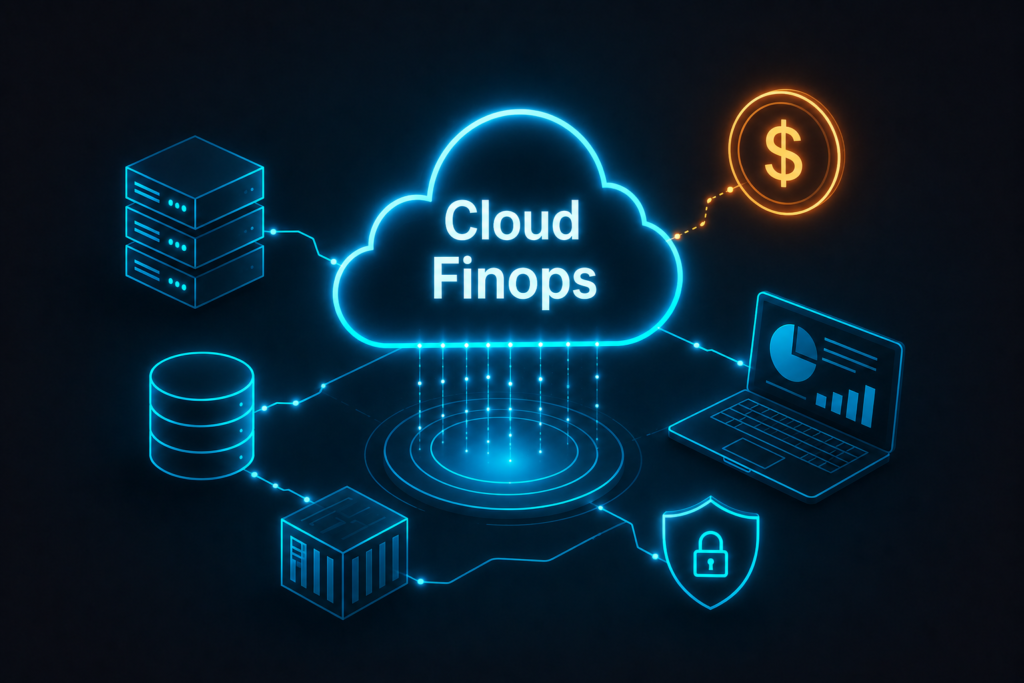
Cloud computing promised unlimited scalability, faster innovation, and reduced infrastructure management. Organizations migrated workloads, modernized applications, and embraced distributed architectures to accelerate digital transformation.
However, as cloud adoption matured, many enterprises encountered an unexpected challenge—not performance, but cost visibility.
Infrastructure spending became increasingly difficult to predict.
Thousands of virtual machines, containers, APIs, storage volumes, serverless functions, AI workloads, and data pipelines generated a level of operational complexity that traditional budgeting methods could no longer manage effectively.
This challenge has given rise to a new discipline inside enterprise technology organizations: Cloud FinOps 2.0.
Unlike conventional cost management, modern FinOps combines financial intelligence, engineering practices, automation, and predictive analytics to transform infrastructure spending into a strategic business capability rather than a monthly surprise.
The future of cloud infrastructure will not belong to the organizations spending the most—it will belong to those spending the smartest.
Infrastructure Has Become Dynamic Rather Than Static
Traditional data centers operated on predictable capacity planning.
Servers were purchased, installed, and depreciated over long periods, making infrastructure costs relatively stable.
- Cloud environments operate differently.
- Resources can be provisioned in seconds and removed just as quickly.
- Development teams launch temporary environments.
- AI workloads consume enormous computing power.
- Containers scale automatically based on demand.
- Analytics platforms expand storage continuously.
- The infrastructure itself changes every minute.
Managing this level of dynamism requires financial visibility that evolves as rapidly as the cloud environment itself.
Why Traditional Cost Management No Longer Works
Monthly invoices provide historical information. Modern enterprises require real-time operational intelligence. By the time finance teams identify overspending, engineering teams may have already deployed additional workloads or launched new services. Reactive reporting creates delayed decision-making.
Cloud FinOps 2.0 introduces continuous optimization instead of retrospective analysis. Infrastructure becomes financially observable in the same way that application performance is operationally observable. Organizations gain immediate insight into where costs originate and why they exist.
Cost Optimization Is No Longer Just About Saving Money
Many executives mistakenly associate cloud optimization with budget reduction alone.
In reality, intelligent infrastructure management improves overall business performance.
Efficient cloud operations enable organizations to:
- Accelerate product launches
- Increase engineering agility
- Improve application performance
- Scale globally with confidence
- Reduce operational waste
- Enhance resource utilization
- Support innovation without uncontrolled spending
Financial efficiency becomes an enabler of growth rather than a constraint.
Well-managed infrastructure creates room for experimentation and expansion.
The Evolution Toward Autonomous Cost Intelligence
The next generation of cloud platforms increasingly makes optimization decisions automatically.
Instead of waiting for engineers to identify idle resources, intelligent infrastructure continuously analyzes utilization patterns and recommends improvements.
Modern optimization engines evaluate:
- Compute consumption
- Storage utilization
- Network traffic
- Database efficiency
- Container density
- Reserved capacity usage
- Workload scheduling
- Geographic deployment patterns
The result is an infrastructure environment that actively seeks greater efficiency without compromising reliability.
Optimization becomes continuous rather than periodic.
Infrastructure Decisions Are Becoming Business Decisions
Every infrastructure choice influences customer experience. Choosing faster storage can improve application responsiveness. Optimizing network architecture can reduce latency. Balancing workloads across regions can increase resilience.
Intelligent cost optimization evaluates technical decisions through a business lens rather than purely an engineering perspective.
Organizations begin asking:
- Which workload generates the highest business value?
- Which application deserves premium infrastructure?
- Which environments can operate on lower-cost resources?
- Which services should scale automatically?
Infrastructure evolves into a strategic asset supporting business objectives.
The Rise of Unit Economics in Cloud Operations
Leading enterprises increasingly measure infrastructure through unit economics.
Instead of tracking overall cloud expenditure, they calculate costs associated with individual business activities.
Examples include:
- Cost per transaction
- Cost per customer onboarded
- Cost per API request
- Cost per AI inference
- Cost per analytics query
- Cost per document processed
- Cost per active user
- Cost per business workflow
These metrics connect technology spending directly to business value.
Executive conversations shift from infrastructure expenses to operational efficiency.
Building Self-Optimizing Infrastructure
Automation is redefining cloud operations.
Infrastructure platforms increasingly adjust themselves based on demand, utilization, and predefined business objectives.
Self-optimizing environments can:
- Scale resources automatically
- Archive inactive data
- Consolidate workloads
- Power down unused environments
- Rebalance storage tiers
- Optimize compute allocation
- Recommend architectural improvements
Human teams establish governance policies while intelligent systems perform continuous optimization.
This significantly reduces operational overhead.
Collaboration Between Finance and Engineering
Historically, engineering teams focused on performance while finance teams focused on budgets.
- Cloud FinOps creates shared accountability.
- Engineering gains visibility into financial impact.
- Finance develops understanding of technical architecture.
- Product teams incorporate infrastructure efficiency into development planning.
- Procurement aligns purchasing strategies with workload forecasts.
This cross-functional collaboration enables better investment decisions across the enterprise. Infrastructure spending becomes transparent instead of fragmented.
Governance Becomes a Core Infrastructure Capability
Optimization without governance introduces risk.
Enterprises adopting advanced FinOps strategies establish policies that balance innovation with financial discipline.
Common governance practices include:
- Resource tagging standards
- Automated budget alerts
- Cost ownership models
- Environment lifecycle management
- Infrastructure approval policies
- Utilization monitoring
- Compliance reporting
- Capacity forecasting
Governance ensures infrastructure remains scalable without becoming financially unpredictable.
Why Cloud Efficiency Will Define Competitive Advantage
Cloud infrastructure is no longer simply a technology foundation. It is an operational engine that influences profitability, customer experience, and innovation speed.
Organizations capable of continuously aligning infrastructure investments with business outcomes will deploy new services faster, respond to market changes more effectively, and maximize returns from every technology initiative.
Cloud FinOps 2.0 represents more than cost management. It represents a philosophy where infrastructure becomes intelligent, adaptive, financially aware, and strategically aligned with enterprise goals. In an increasingly digital economy, the most successful organizations will not be those with the largest cloud footprint. They will be the ones with the smartest infrastructure economics.