
Emerging tech & Deep tech • 8 days ago • Shruti Das
Digital transformation has enabled organizations to collect unprecedented amounts of data. Every customer interaction, supply chain event, operational process, and financial transaction contributes to an expanding digital footprint.
Yet possessing information does not automatically create intelligence.
Many enterprises still depend on static dashboards and historical reports that explain what happened but provide limited guidance on what should happen next.
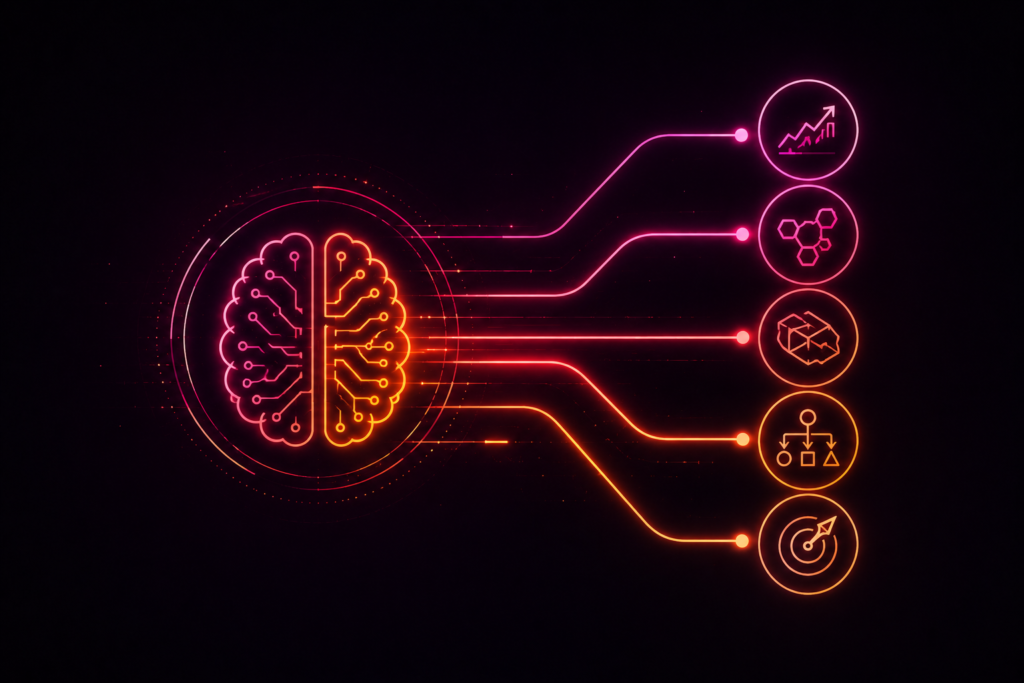
This challenge is driving the emergence of Computational Intelligence Platforms—deep technology ecosystems capable of continuously analyzing complex business environments, identifying optimal solutions, and supporting autonomous decision-making.
Rather than simply processing data, these platforms learn, adapt, simulate, and optimize business operations in ways that traditional software cannot. For B2B enterprises seeking sustainable competitive advantage, computational intelligence may become one of the defining technologies of the next decade.
What Is a Computational Intelligence Platform?
A computational intelligence platform combines artificial intelligence, optimization algorithms, evolutionary computing, fuzzy logic, neural networks, probabilistic reasoning, and simulation technologies into a unified decision engine.
Instead of executing predefined rules, the platform continuously evaluates multiple variables and identifies the most effective course of action based on changing business conditions. The objective is not automation alone. The objective is intelligent optimization. These systems become digital advisors capable of improving enterprise performance across thousands of interconnected decisions.
Why Traditional Analytics Is Reaching Its Limits
Business environments have become too dynamic for static reporting. Supply chain conditions change hourly. Customer expectations evolve rapidly. Inventory levels fluctuate continuously. Operational costs shift unexpectedly. Traditional analytics explains historical performance but often fails to recommend optimal future actions. Computational intelligence introduces adaptive reasoning. The platform evaluates millions of possible scenarios before identifying the solution that best aligns with organizational objectives. Decision-making becomes proactive instead of reactive.
From Data Processing to Decision Optimization
Conventional business systems focus on recording transactions. Computational intelligence focuses on improving outcomes. Rather than storing information, it continuously searches for better ways to allocate resources, reduce waste, improve efficiency, and maximize business value. Every operational event becomes an opportunity for optimization. This transforms enterprise software from passive infrastructure into an active strategic partner.
Enterprise Applications Across Industries
The flexibility of computational intelligence enables adoption across diverse business functions. Common applications include:
- Dynamic supply chain planning
- Intelligent production scheduling
- Logistics route optimization
- Energy consumption management
- Workforce allocation
- Procurement optimization
- Pricing strategy analysis
- Financial portfolio optimization
- Predictive maintenance planning
- Resource utilization management
Organizations gain the ability to optimize interconnected processes simultaneously instead of improving isolated functions independently.
Learning From Constant Change
Markets rarely remain stable. Economic conditions fluctuate. Consumer behavior evolves. Regulatory requirements change. Supplier performance varies.
Computational intelligence platforms continuously learn from these changes and refine recommendations accordingly. The system improves through experience rather than requiring manual reprogramming. Its intelligence grows alongside the organization. This adaptive capability makes the technology particularly valuable for enterprises operating in uncertain environments.
Enhancing Human Decision-Making
Computational intelligence is not designed to replace executives or business leaders. Its purpose is to augment human expertise. Complex enterprise decisions often involve hundreds of variables interacting simultaneously. No individual can realistically evaluate every possible outcome. Computational intelligence rapidly analyzes these variables and presents optimized recommendations supported by measurable reasoning. Leaders remain responsible for strategy while technology enhances analytical capability. The relationship becomes collaborative rather than competitive.
Simulation Before Execution
One of the most valuable capabilities of computational intelligence platforms is simulation. Organizations can test strategic decisions within virtual environments before implementation. Business leaders can evaluate:
- Market expansion strategies
- Distribution network changes
- New pricing models
- Manufacturing capacity adjustments
- Supplier transitions
- Product portfolio optimization
- Investment allocation
- Customer service improvements
Simulation significantly reduces business risk by revealing potential outcomes before real-world execution. Enterprises gain confidence through experimentation without operational disruption.
AI Alone Is Not Enough
Artificial intelligence excels at recognizing patterns. Computational intelligence extends beyond recognition into optimization. An AI system may identify declining customer engagement.
A computational intelligence platform evaluates multiple intervention strategies and recommends the one most likely to maximize long-term profitability while minimizing operational cost. This progression from prediction to optimization represents a major advancement in enterprise technology. Organizations move beyond understanding problems toward systematically solving them.
Building Autonomous Business Operations
Future enterprises will increasingly depend on intelligent systems capable of making routine operational decisions independently. Computational intelligence provides the foundation for autonomous workflows. Inventory replenishment can be optimized automatically. Production schedules can adjust in response to demand changes. Transportation routes can evolve based on logistics constraints. Energy consumption can adapt to operational conditions.
These autonomous optimizations improve efficiency while allowing employees to focus on strategic initiatives requiring creativity and judgment.
The Future of Competitive Advantage
Technology has traditionally helped businesses operate faster. The next generation of deep technology will help businesses operate smarter. Computational intelligence platforms create organizations capable of continuously learning, adapting, optimizing, and evolving. Competitive advantage will increasingly depend not on the amount of available data but on the ability to transform that data into intelligent action.
Enterprises that embrace computational intelligence will improve operational resilience, accelerate innovation, reduce waste, and strengthen decision quality across every layer of the business. As digital transformation enters its next phase, the organizations that consistently optimize rather than merely automate will define the future of B2B leadership.
Computational intelligence is more than another technology trend. It represents the evolution of enterprise software into an intelligent partner that helps organizations make better decisions every single day.