
Digital Transformation • 19 hours ago • Melvin Hall
Digital transformation has evolved far beyond cloud migration and process automation. Organizations are no longer satisfied with simply digitizing existing operations—they want to predict outcomes, simulate business scenarios, and make smarter decisions before risks become reality.
This demand has given rise to one of the most transformative concepts in enterprise technology: the Digital Twin.
While many associate digital twins with manufacturing equipment or industrial machinery, forward-thinking B2B enterprises are applying the same concept to business operations, supply chains, customer journeys, logistics networks, and even entire organizations. The result is a living digital representation of business reality that enables companies to anticipate problems instead of reacting to them. As digital transformation matures, digital twin strategies are emerging as a foundation for intelligent enterprises.
What Is an Enterprise Digital Twin?
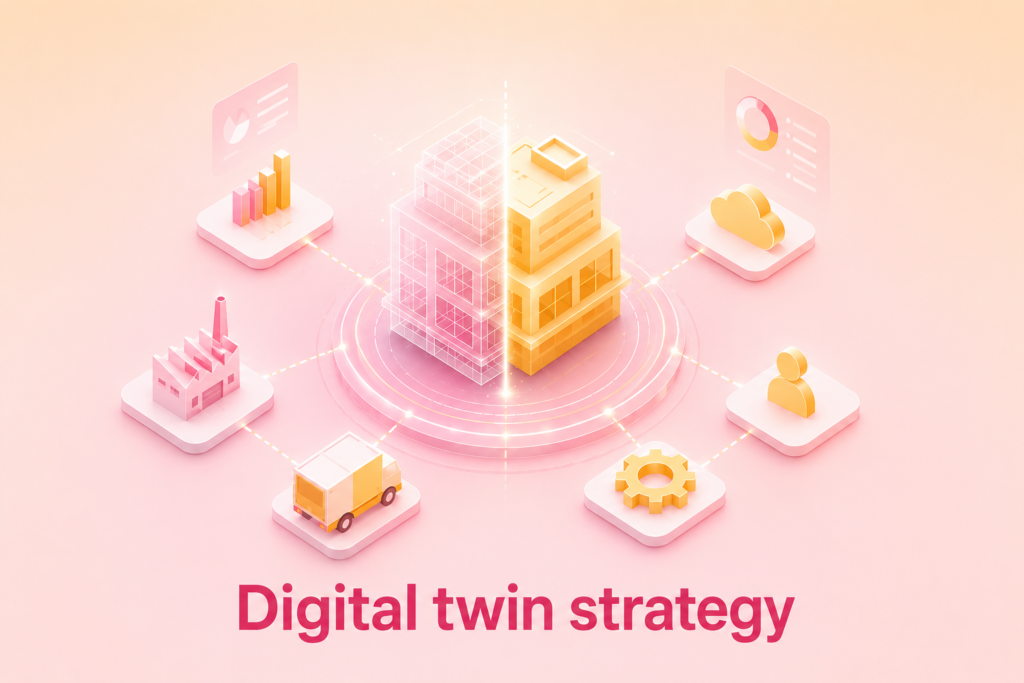
An enterprise digital twin is a dynamic virtual representation of a real-world business process, asset, operation, or ecosystem. Unlike traditional dashboards that simply display historical data, a digital twin continuously reflects operational changes and enables businesses to simulate different scenarios before making decisions. Rather than asking what happened yesterday, organizations can ask what is likely to happen tomorrow. This shift transforms digital transformation from observation into prediction.
Why Traditional Analytics Is No Longer Enough
Most organizations possess enormous amounts of data. Unfortunately, that data often remains fragmented across ERP systems, CRM platforms, finance applications, manufacturing systems, procurement software, and customer support tools. Reports explain past performance but rarely predict future outcomes. Executives spend significant time interpreting reports instead of proactively managing risks.
Digital twins bridge this gap by combining enterprise data into an intelligent model that continuously mirrors business operations. The enterprise becomes observable, measurable, and increasingly predictable.
Moving From Reactive Operations to Predictive Enterprises
Traditional organizations often identify problems after they occur. Inventory shortages impact deliveries. Supplier delays disrupt production. Customer dissatisfaction appears after negative feedback. Unexpected costs reduce profitability. Digital twins change this operating model. By continuously modeling enterprise conditions, organizations can identify emerging risks and optimize decisions before disruptions occur. The business becomes proactive rather than reactive.
Applications Across Modern B2B Organizations
Enterprise digital twins are expanding beyond physical assets into virtually every business function. Examples include:
- Supply chain optimization
- Procurement planning
- Warehouse operations
- Customer lifecycle management
- Product development
- Financial forecasting
- Workforce planning
- Service delivery optimization
- Distribution networks
- Multi-site operations
Every connected business process becomes a candidate for intelligent simulation.
Creating a Single Source of Operational Truth
One of the biggest barriers to digital transformation is inconsistent information. Sales teams maintain one version of customer data. Finance relies on another. Operations use separate systems. Executives receive conflicting reports. Digital twins consolidate information into a synchronized operational model. Every stakeholder works from the same business reality. This eliminates duplicated effort, improves collaboration, and accelerates decision-making across departments.
AI and Digital Twins Form a Powerful Partnership
Artificial intelligence becomes significantly more valuable when supported by an enterprise digital twin. AI identifies patterns. Digital twins provide context. Together they enable organizations to forecast demand, optimize resources, detect anomalies, and recommend corrective actions before problems escalate. Potential applications include:
- Predictive inventory management
- Intelligent production scheduling
- Dynamic pricing optimization
- Automated risk assessment
- Customer churn prediction
- Supplier performance forecasting
- Capacity planning
- Resource allocation optimization
Organizations gain decision intelligence instead of simple automation.
Strengthening Customer Experience Through Operational Visibility
Customers rarely see internal business complexity. They only experience outcomes. Delayed shipments, inconsistent communication, inaccurate commitments, and slow support all reduce trust. Digital twins improve customer experiences by giving organizations complete visibility into operational performance. Sales teams can provide realistic commitments. Support teams can identify issues instantly. Operations teams can adjust resources proactively. Customers benefit from faster, more reliable service built on connected enterprise intelligence.
Digital Twins Improve Strategic Planning
Business strategy often depends on assumptions. Executives estimate demand, forecast investments, and evaluate expansion opportunities using historical trends. Digital twins introduce simulation into strategic planning. Organizations can model:
- New market expansion
- Capacity increases
- Supplier changes
- Product launches
- Pricing strategies
- Distribution adjustments
- Resource allocation
- Operational restructuring
Leaders make decisions based on modeled outcomes instead of intuition alone.
Building a Resilient Enterprise
Business disruptions can emerge from unexpected operational, economic, or supply chain events. Resilient organizations recover quickly because they understand how every process connects. Digital twins visualize these interdependencies. A disruption in procurement immediately reveals downstream effects on manufacturing, logistics, finance, and customer commitments. This transparency enables faster mitigation and more effective business continuity planning. Resilience becomes an engineered capability rather than an emergency response.
Technology Alone Cannot Build a Digital Twin
Creating a successful digital twin requires more than software. Organizations must establish consistent data governance, cross-functional collaboration, standardized business processes, and a culture that values continuous improvement. Technology provides the platform. People and processes create intelligence. The most successful enterprises treat digital twins as an organizational strategy rather than an IT project.
The Future of B2B Digital Transformation
The next generation of enterprise transformation will not be measured by how many systems an organization deploys. It will be measured by how intelligently those systems interact. Digital twins represent a shift from static operations to living business ecosystems capable of learning, adapting, and improving continuously.
Organizations that embrace this model will make faster decisions, reduce operational risk, improve customer experiences, and unlock new levels of business agility. Digital transformation is evolving beyond digitization. It is becoming the science of understanding, simulating, and optimizing the enterprise in real time. The organizations that master digital twin strategies today will define the competitive standards of tomorrow.