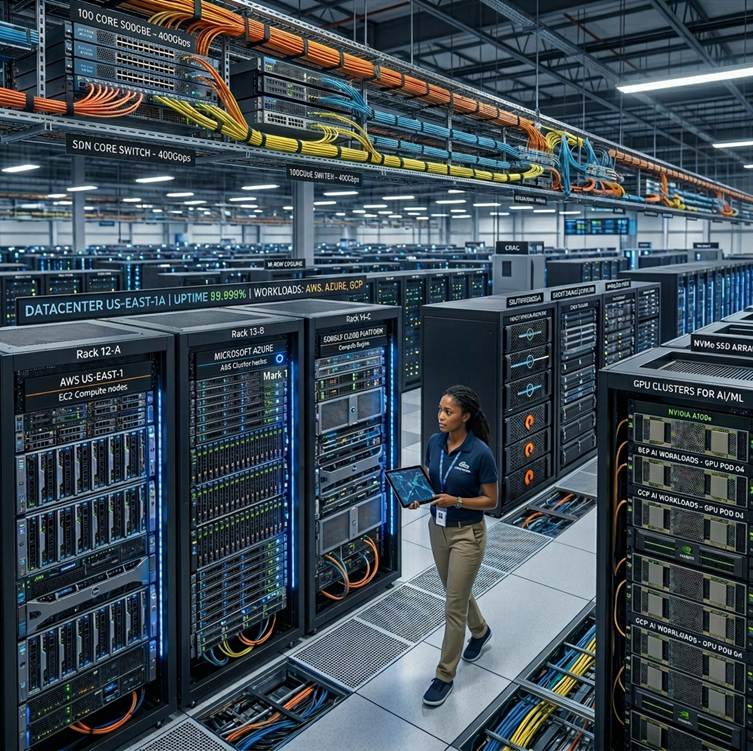


Behind every successful enterprise SaaS platform lies a carefully engineered architecture designed to deliver scalability, reliability, and security at massive scale. Unlike traditional on-premise software, SaaS applications must serve thousands sometimes millions of users simultaneously across different organizations, regions, and regulatory environments. This requires architectural principles fundamentally different from legacy enterprise systems.
At the heart of modern SaaS architecture is multi-tenancy.
Multi-tenancy means a single application instance serves multiple customers (tenants) while maintaining strict logical separation of their data. Rather than deploying separate software environments for each customer, providers operate shared infrastructure with isolated data layers. This approach dramatically improves efficiency and cost-effectiveness.
In single-tenant systems, each customer requires dedicated resources, increasing operational overhead. Multi-tenant architecture allows providers to optimize compute, storage, and networking resources dynamically. It also simplifies updates, as improvements can be deployed universally without maintaining separate codebases.
However, multi-tenancy introduces complexity — especially around data isolation and security. Logical separation mechanisms ensure one tenant’s data cannot be accessed by another. Role-based access controls, encryption layers, and tenant-aware database schemas enforce boundaries within shared systems.
Scalability is another defining requirement of SaaS architecture.
Enterprise customers expect performance to remain consistent regardless of user growth or usage spikes. SaaS platforms must scale horizontally, meaning they add additional servers or containers automatically as demand increases. Cloud-native infrastructure makes this possible.
Container orchestration platforms such as Kubernetes enable dynamic workload distribution. Applications are broken into smaller microservices, each responsible for specific functions. If traffic increases for a particular service — such as authentication or reporting — the system scales that service independently without affecting others.
This microservices approach improves resilience. If one component fails, it does not necessarily bring down the entire application. Fault isolation enhances overall system stability.
Cloud infrastructure providers like Amazon Web Services and Microsoft Azure supply elastic computing resources that SaaS platforms leverage to manage demand fluctuations seamlessly.
High availability is non negotiable in enterprise SaaS. Downtime impacts productivity, revenue, and customer trust. Therefore, modern SaaS architecture includes redundancy at multiple layers:
- Distributed data storage across regions
- Automated failover systems
- Load balancing across multiple instances
- Continuous monitoring and alerting
Data architecture is equally critical. SaaS platforms often use a combination of relational databases for structured transactional data and distributed storage systems for analytics and logs. Replication strategies ensure data durability even if a data center experiences disruption.
Security must be embedded throughout architectural design. SaaS platforms operate in multi tenant environments, making strong identity and access management systems essential. Encryption protects data both at rest and in transit. Audit logs track user activity for compliance and forensic analysis.
API-first design has also become standard in SaaS architecture. Enterprises rarely use SaaS platforms in isolation. Instead, they integrate them with other tools such as CRM systems, ERP platforms, and analytics engines. Robust APIs enable seamless data exchange and automation across ecosystems.
Key architectural pillars of enterprise SaaS include:
- Multi tenant infrastructure with strict logical isolation
- Microservices based modular design
- Horizontal auto scaling capabilities
- High availability and redundancy
- API driven interoperability
Continuous deployment pipelines further differentiate SaaS architecture from traditional models. DevOps practices enable frequent, incremental updates without service disruption. Automated testing ensures new releases maintain stability and performance.
Observability is another essential component. Real-time monitoring, logging, and tracing systems provide visibility into application performance. Metrics such as latency, error rates, and throughput help engineering teams detect issues proactively.
Performance optimization must also account for global users. Content delivery networks (CDNs) distribute static content geographically to reduce latency. Edge caching accelerates response times for international customers.
Despite its sophistication, SaaS architecture must remain adaptable. Customer needs evolve. Regulatory requirements shift. Usage patterns change. Architectural flexibility ensures long-term sustainability.
Designing SaaS systems is not just about building software it is about engineering an ecosystem capable of scaling efficiently, isolating securely, and operating continuously.
In enterprise environments where reliability and performance directly impact business operations, SaaS architecture becomes a strategic differentiator.
Well-designed SaaS platforms are invisible to users. They simply work reliably, securely, and at scale enabling organizations to focus on innovation rather than infrastructure.