

As digital transformation initiatives mature, enterprises are recognizing that technology deployment alone does not guarantee competitive advantage. Sustainable transformation requires a fundamental shift toward data-driven culture and analytics-led decision-making across all business units.
Historically, decision-making in many organizations relied on historical reporting and executive intuition. Today, enterprises are embedding real-time analytics and predictive modeling into operational workflows to enable faster, evidence-based decisions.
Cloud analytics platforms such as Google Cloud and Microsoft offer scalable data warehouses, AI-powered dashboards, and integrated visualization tools that support enterprise-wide insight generation.
Modern data-driven transformation typically includes:
- Centralized data lake architecture
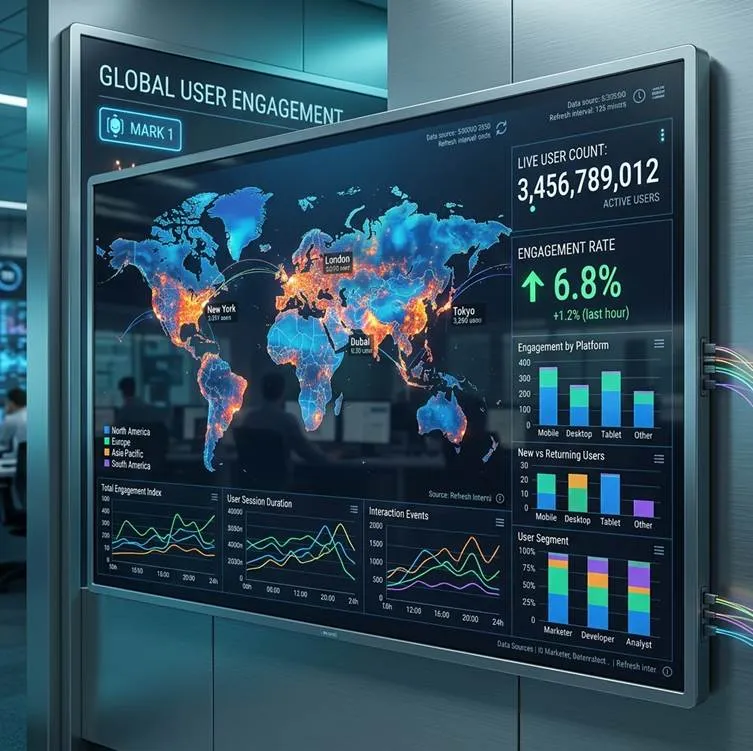
- Real-time business intelligence dashboards
- Predictive analytics integration
- Self-service analytics tools
- Data governance frameworks
Centralized data platforms reduce silos and enable cross-department collaboration. Sales, finance, and operations teams can access consistent datasets, improving alignment and transparency.
Self-service analytics tools empower non-technical employees to explore data independently. Platforms like Tableau support interactive visualization and user-friendly reporting.
However, expanding data access requires strong governance.
Enterprises must ensure:
- Data quality consistency
- Role-based access control
- Regulatory compliance alignment
- Clear data ownership definitions
Data literacy programs are becoming essential. Employees must understand how to interpret metrics accurately and avoid misinformed conclusions.
Transformation leaders are investing in training initiatives to build analytical competency across departments.
Predictive analytics further strengthens decision-making capabilities. Instead of reviewing past performance, organizations forecast future trends and proactively adjust strategies.
For example, marketing teams use predictive models to identify high-value customers, while supply chain managers anticipate demand fluctuations.
Embedding analytics directly into workflows accelerates operational responsiveness.
Digital transformation success increasingly depends on the ability to operationalize insights — not merely generate reports.
Common barriers to analytics-led transformation include:
- Legacy system integration challenges
- Inconsistent data definitions across departments
- Resistance to transparency
- Insufficient executive alignment
Executive sponsorship plays a critical role. Leadership must champion data-backed decision-making as an organizational norm.
Performance measurement frameworks are also evolving. Enterprises track transformation impact through:
- Revenue growth from digital channels
- Operational efficiency improvements
- Customer retention metrics
- Reduced error rates
Artificial intelligence integration further enhances analytics maturity by automating pattern recognition and anomaly detection.
Data-driven culture extends beyond technology infrastructure — it reflects behavioral change within organizations.
As digital ecosystems become increasingly complex, intuition alone is insufficient for competitive decision-making.
Enterprises that prioritize analytics maturity position themselves to respond quickly to market shifts and operational disruptions.
Digital transformation anchored in data governance and insight generation creates long-term resilience.
In the evolving enterprise landscape, analytics-led culture is no longer optional — it is foundational to sustained transformation success.