
Fusion energy, long considered one of the most ambitious deep tech pursuits, is entering a new phase of accelerated development. After decades of scientific experimentation, researchers and private-sector ventures are reporting measurable progress toward sustained fusion reactions that could eventually support commercial energy production.
Fusion differs fundamentally from conventional nuclear fission. Instead of splitting heavy atomic nuclei, fusion combines light nuclei — typically isotopes of hydrogen — to release vast amounts of energy. The process mirrors the reaction that powers the sun and produces minimal long-lived radioactive waste.
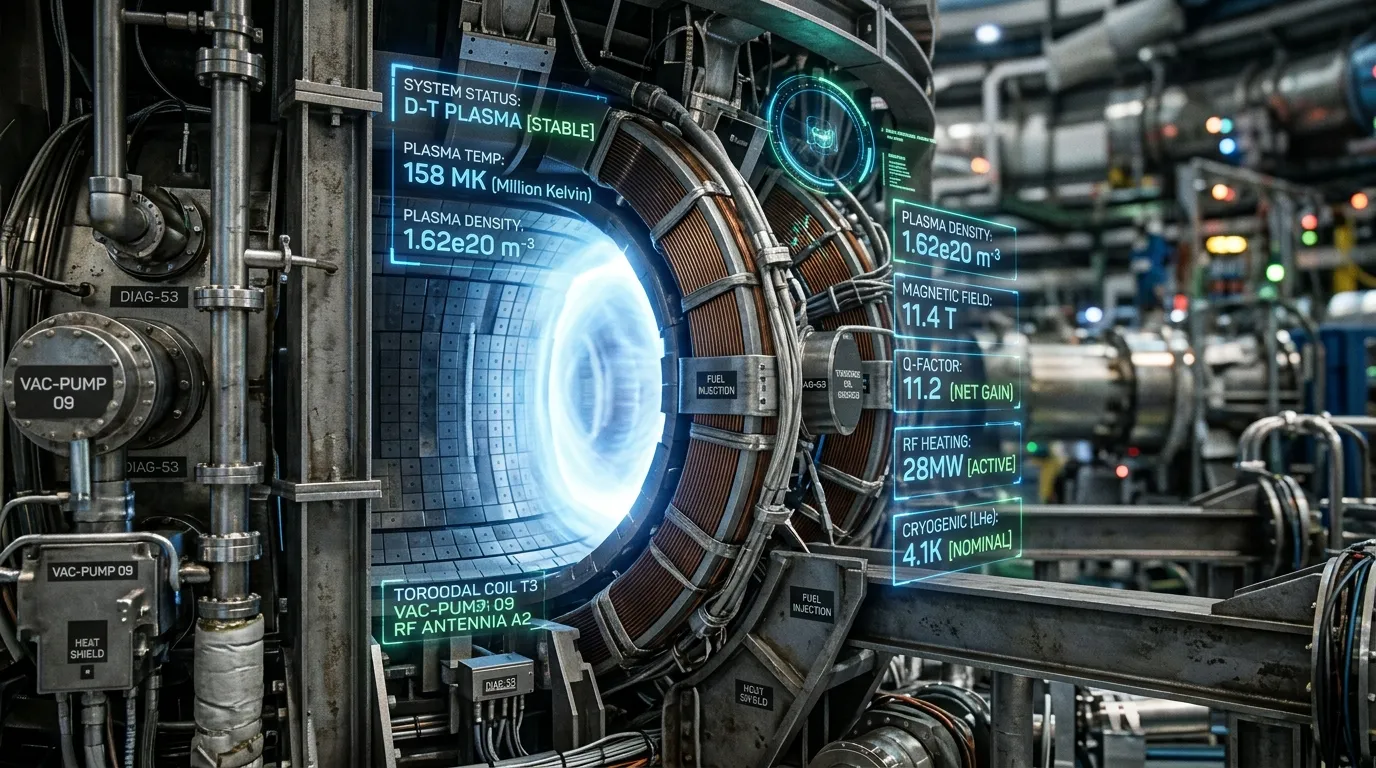
Organizations such as ITER and private firms like Commonwealth Fusion Systems are advancing reactor designs capable of generating stable plasma confinement at extremely high temperatures.
Recent technical milestones include improved magnetic confinement techniques and stronger superconducting magnets. These developments enhance plasma stability — one of the primary challenges in achieving sustained fusion reactions.
Key drivers accelerating fusion research include:
- Rising global energy demand
- Climate decarbonization targets
- Energy security concerns
- Advancements in high-temperature superconductors
Unlike intermittent renewable sources such as solar or wind, fusion has the potential to deliver constant baseload energy without carbon emissions.
Private investment in fusion startups has increased significantly. Venture capital firms and institutional investors are funding experimental reactor designs, attracted by the long-term transformative potential.
However, commercial viability remains a long-term objective. Fusion reactors require:
- Extremely high temperatures (millions of degrees Celsius)
- Stable plasma confinement systems
- Advanced materials capable of withstanding extreme conditions
- Large-scale engineering infrastructure
Engineering complexity remains one of the most substantial barriers. Even with successful experimental reactions, scaling fusion reactors for grid integration will require years of additional development.
Government support remains central to progress. International collaborations are pooling research expertise and infrastructure funding.
Advanced materials science plays a crucial role. Reactor walls must withstand neutron bombardment and thermal stress while maintaining structural integrity.
Companies such as Helion Energy are exploring alternative fusion approaches, including pulsed fusion systems that differ from traditional tokamak reactor designs.
Energy policymakers are closely monitoring fusion developments as part of long-term decarbonization strategies.
While commercialization timelines remain uncertain, momentum in research and private funding suggests that fusion is transitioning from theoretical ambition toward practical engineering exploration.
Fusion energy represents a hallmark of deep tech innovation — characterized by high technical complexity, long development cycles, and transformative potential.
If commercial breakthroughs occur, fusion could significantly reshape global energy systems and reduce dependence on fossil fuels.
Though still emerging, fusion research is steadily progressing toward a new era of clean energy innovation.