
Advanced robotics and autonomous systems are rapidly evolving from isolated automation tools into integrated, intelligent infrastructure across manufacturing, logistics, and energy sectors. While industrial robots have existed for decades, new advancements in artificial intelligence, sensor fusion, and edge computing are enabling machines to operate with greater autonomy and adaptability.
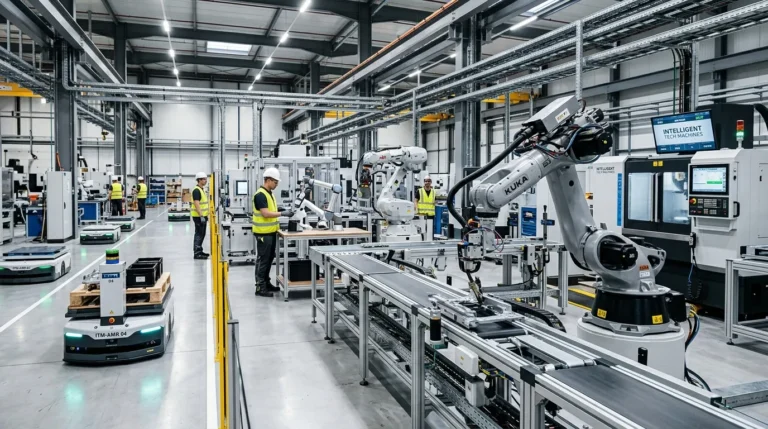
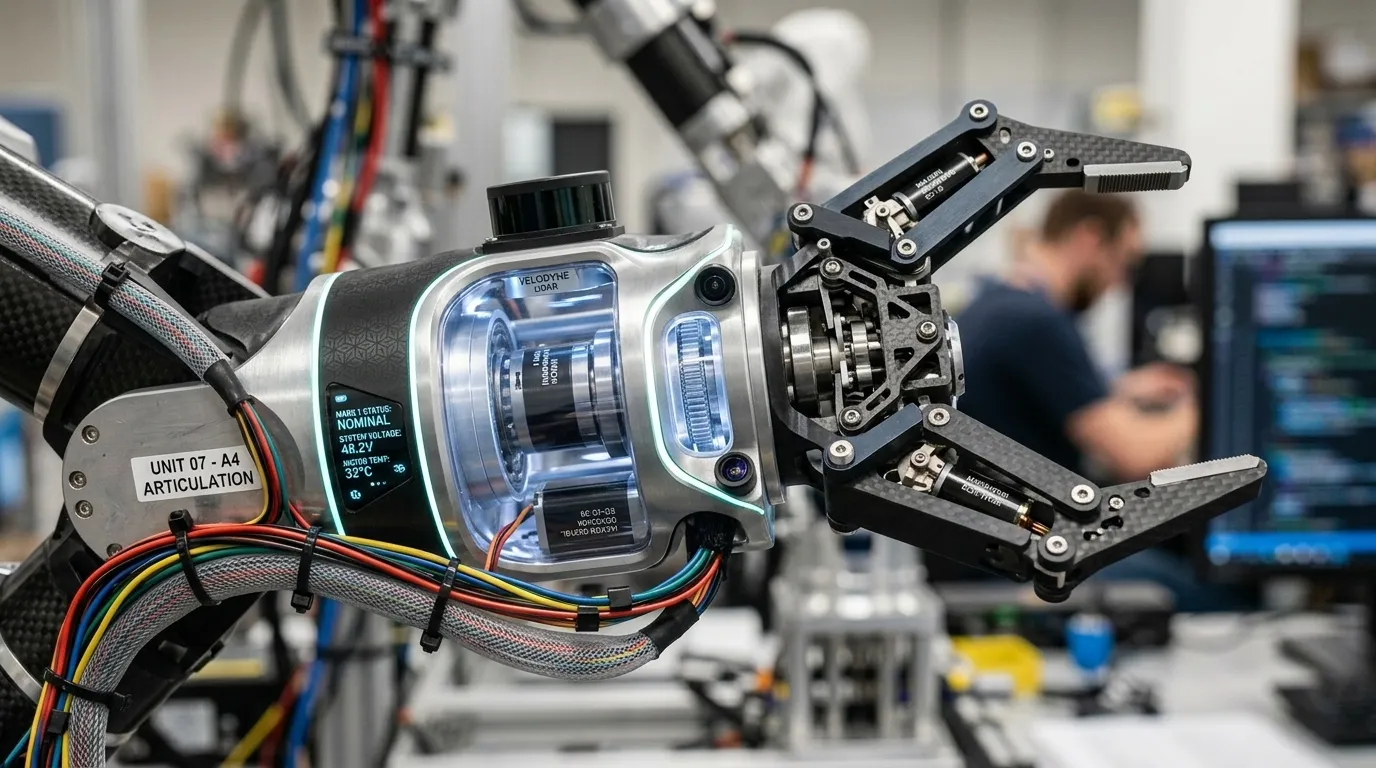
Traditional industrial robotics focused on repetitive, pre-programmed tasks within controlled environments. Modern systems, however, integrate real-time perception and decision-making capabilities, allowing robots to respond dynamically to environmental changes.
Companies such as Boston Dynamics are developing mobile robotic platforms capable of navigating complex industrial environments, while firms like ABB continue advancing collaborative robotic arms designed for precision manufacturing.
Key drivers accelerating robotics innovation include:
- Labor shortages in industrial sectors
- Rising demand for warehouse automation
- Expansion of e-commerce logistics
- Safety improvements in hazardous environments
- AI-driven vision and object recognition systems
Autonomous mobile robots (AMRs) are increasingly deployed in warehouses to streamline inventory movement and reduce manual handling. These systems use advanced mapping technologies and LiDAR sensors to navigate dynamically without fixed tracks.
Collaborative robots — or cobots — represent another significant shift. Unlike traditional industrial robots that operate in isolation, cobots are designed to work safely alongside human operators, improving productivity without requiring complete workflow redesign.
Autonomous systems are also expanding into energy and infrastructure inspection. Robots equipped with thermal imaging and AI-powered diagnostics can assess pipelines, power grids, and offshore facilities, reducing the need for human exposure to hazardous conditions.
Companies such as NVIDIA provide AI computing platforms that power machine vision and real-time robotics processing, enabling faster perception and decision cycles.
Despite rapid innovation, deployment challenges remain.
Advanced robotics systems require:
- High initial capital investment
- Integration with legacy industrial equipment
- Workforce retraining programs
- Robust cybersecurity safeguards
Cybersecurity has become particularly important as robotics systems connect to cloud platforms and enterprise networks.
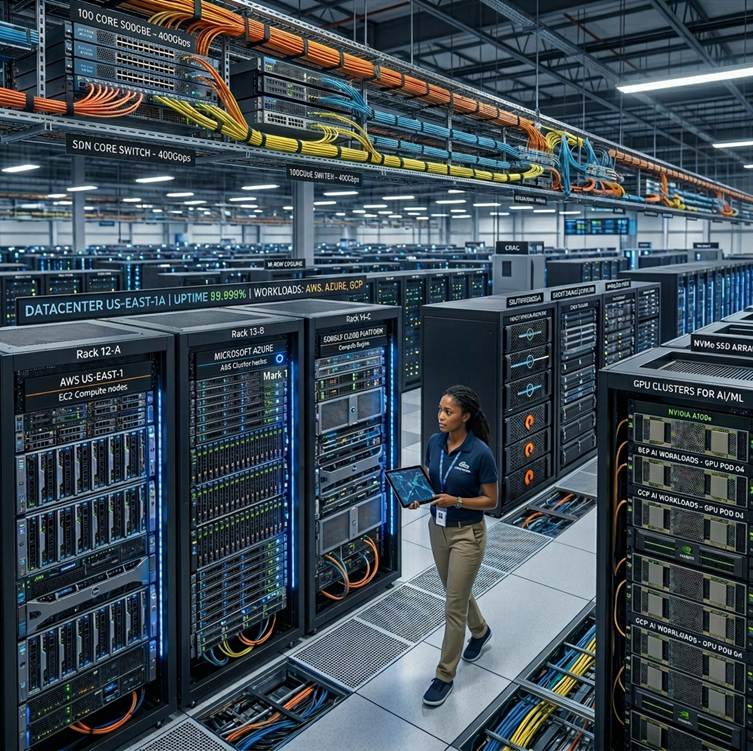
Edge computing plays a critical role in enabling real-time processing. Instead of relying solely on centralized cloud infrastructure, robots process data locally to reduce latency and improve responsiveness.
Autonomous systems are also entering transportation sectors, including mining and agriculture, where self-operating vehicles increase operational efficiency.
Regulatory frameworks are evolving alongside technological advancement. Safety standards must adapt to increasingly autonomous machine behavior.
From an economic perspective, robotics adoption improves scalability and operational consistency. However, organizations must balance automation investment with workforce strategy.
Industry analysts predict continued acceleration in robotics integration as AI models improve perception accuracy and hardware costs gradually decline.
Advanced robotics exemplifies deep tech innovation: capital-intensive development, interdisciplinary engineering, and transformative operational impact.
As machine intelligence converges with physical automation, autonomous systems are reshaping how industries manage productivity, safety, and scalability.
The next decade is expected to see broader enterprise integration of robotics platforms as capabilities mature and deployment costs stabilize.