
Emerging tech & Deep tech • 1 day ago • Neha Jamwal
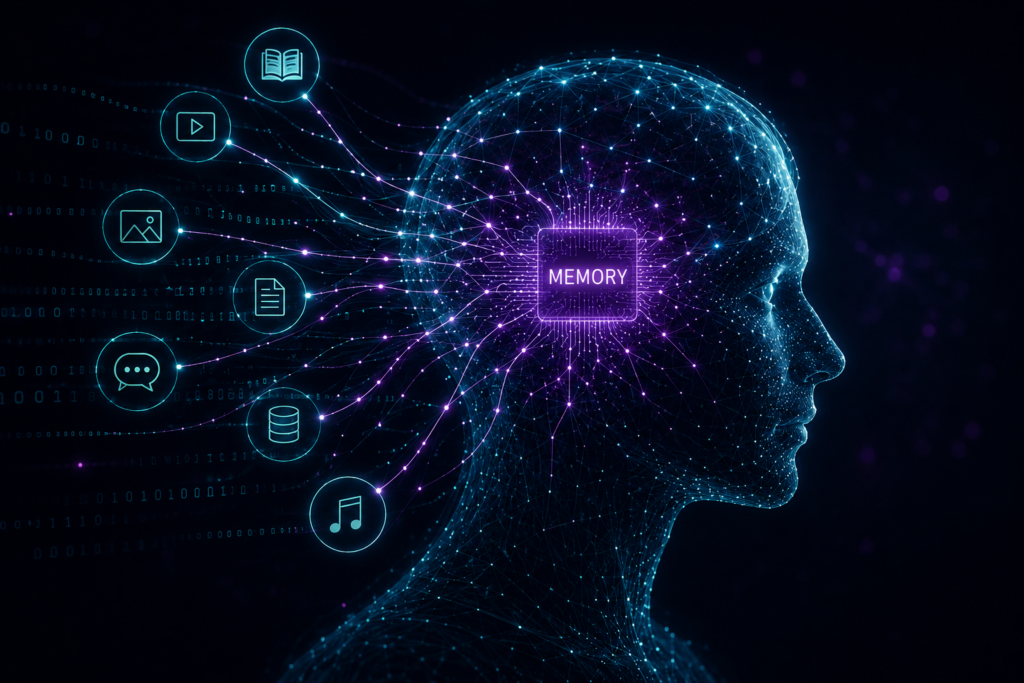
Artificial intelligence has rapidly become an essential component of modern enterprise software. Organizations now rely on AI to summarize documents, answer customer queries, generate reports, automate workflows, and assist employees across numerous business functions. Despite these impressive capabilities, most AI systems share a significant limitation—they treat every interaction as an isolated event. Once a conversation ends or a task is completed, much of the contextual understanding disappears unless it has been deliberately stored elsewhere.
This limitation becomes increasingly apparent as enterprises expand their AI initiatives. Businesses expect intelligent systems to remember previous customer interactions, learn from operational decisions, recognize organizational terminology, understand internal policies, and improve recommendations over time. Without memory, AI behaves like an employee who forgets every meeting after leaving the conference room. Each new request requires rebuilding context from the beginning, leading to repetitive conversations, inconsistent responses, and reduced efficiency.
This challenge has accelerated the development of AI Memory Architectures, an emerging deep technology focused on giving artificial intelligence persistent, structured, and continuously evolving knowledge. Instead of relying only on the information available during a single interaction, AI Memory Architectures allow intelligent systems to retain relevant information, retrieve it when needed, and refine their understanding as new knowledge becomes available.
For enterprises, this capability represents a major step toward building AI systems that become progressively more valuable through experience. Memory transforms artificial intelligence from a reactive assistant into an intelligent business asset capable of supporting long-term operational knowledge, organizational learning, and enterprise-wide decision-making.
What Are AI Memory Architectures?
AI Memory Architectures refer to the frameworks, storage mechanisms, and retrieval systems that enable artificial intelligence to preserve information beyond a single interaction. These architectures determine how knowledge is stored, organized, updated, and accessed so AI can deliver more accurate, personalized, and context-aware responses over time.
Human memory is not simply a collection of facts. People remember experiences, relationships, procedures, priorities, and patterns developed through repeated exposure. AI Memory Architectures attempt to replicate some of these capabilities by combining structured databases, vector embeddings, knowledge graphs, retrieval systems, reasoning engines, and memory management policies into a unified framework.
Instead of viewing every prompt independently, AI equipped with memory can connect previous interactions with current objectives. It understands context more effectively, reduces unnecessary repetition, and delivers responses that reflect accumulated organizational knowledge. The result is not simply a smarter chatbot. It is an intelligent enterprise system capable of preserving institutional knowledge and applying it consistently across departments and business processes.
Why Enterprise AI Needs Memory
Many organizations initially adopted generative AI to improve productivity through content creation and conversational interfaces. As adoption matured, expectations evolved. Enterprises no longer wanted AI that merely generated responses. They wanted systems capable of understanding their business.
Consider a procurement assistant that forgets supplier preferences after every conversation, or an AI-powered customer support platform that cannot recall previous service requests. Employees must repeatedly provide the same information, while customers experience fragmented interactions that reduce confidence in the technology. Persistent memory addresses these shortcomings by enabling AI to retain business knowledge across multiple interactions. This allows intelligent systems to recognize recurring patterns, build richer context, and deliver recommendations that improve with continued use. For enterprises managing thousands of employees, millions of documents, and extensive operational data, memory becomes one of the most valuable capabilities an AI system can possess.
How AI Memory Architectures Work
AI Memory Architectures combine multiple technologies that work together to capture, organize, retrieve, and update information. Each component contributes to the system’s ability to maintain long-term contextual understanding. The process generally follows several stages:
- Information is collected from conversations, enterprise systems, documents, and business applications.
- Relevant knowledge is converted into machine-readable representations.
- Memory management policies determine what information should be retained, updated, or discarded.
- Retrieval mechanisms identify the most relevant knowledge for each new request.
- Reasoning models combine stored memory with current inputs before generating responses.
- New interactions continuously refine the memory, allowing the system to improve over time.
This ongoing learning cycle creates AI systems that accumulate experience in much the same way organizations build institutional knowledge.
Core Components of AI Memory Architectures
Although implementation approaches differ across platforms, most enterprise memory architectures include several foundational components.
Persistent Memory stores important information across multiple interactions instead of limiting knowledge to a single session. Customer preferences, operational procedures, project documentation, and organizational terminology become part of the AI’s long-term knowledge base.
Vector Memory Vector databases convert information into numerical representations that capture semantic meaning. This enables AI to retrieve conceptually related information even when identical words are not used in a search query, significantly improving contextual understanding.
Knowledge Graphs organize relationships between people, business units, products, suppliers, customers, processes, and documents. These interconnected relationships help AI understand how different pieces of enterprise knowledge influence one another.
Retrieval-Augmented Generation Retrieval mechanisms identify the most relevant information from enterprise knowledge stores before AI generates a response. This approach reduces hallucinations and improves factual accuracy by grounding responses in verified organizational data.
Memory Ranking Not every piece of information deserves permanent storage. Memory ranking systems evaluate relevance, reliability, business importance, and frequency of use to determine which information should remain available for future interactions.
Memory Governance Enterprises require strict controls over how information is stored and accessed. Governance policies define retention rules, privacy requirements, access permissions, compliance standards, and auditing procedures that ensure memory systems remain secure and trustworthy.
Different Types of Enterprise AI Memory
Effective AI memory extends beyond storing facts. Modern enterprise systems use different forms of memory to support a wide range of business activities. Common categories include:
- Working Memory: Maintains context during active conversations or workflow execution.
- Long-Term Memory: Stores information that remains valuable across extended periods.
- Procedural Memory: Preserves business processes, operational workflows, and standard operating procedures.
- Semantic Memory: Stores factual knowledge, definitions, technical documentation, and organizational terminology.
- Episodic Memory: Records significant interactions, decisions, project milestones, and historical business events.
- Collaborative Memory: Shares knowledge across teams, departments, and enterprise applications to improve organizational consistency.
Together, these memory types enable AI to support increasingly sophisticated enterprise operations.
Enterprise Applications
As AI Memory Architectures mature, their influence extends far beyond conversational assistants. Persistent organizational memory enables intelligent systems to deliver measurable value across multiple business functions.
Customer Service Customer support platforms can remember previous cases, product ownership, communication preferences, and recurring issues. Agents receive richer context before engaging with customers, while AI assistants deliver more personalized and consistent support experiences.
Enterprise Knowledge Management Organizations often struggle to locate critical information scattered across emails, documents, collaboration platforms, and internal databases. AI memory systems unify this knowledge, making institutional expertise easier to discover and reuse without duplicating work.
Sales and Account Management Sales teams benefit from AI that remembers client objectives, previous discussions, contract details, product interests, and relationship history. This allows representatives to engage customers with greater confidence and stronger contextual understanding.
Software Development Development teams generate enormous volumes of technical knowledge through code repositories, architecture documentation, incident reports, and design discussions. AI Memory Architectures help preserve this expertise, enabling developers to retrieve relevant information quickly while reducing repeated problem-solving.
Healthcare and Life Sciences Healthcare organizations manage extensive clinical knowledge, treatment guidelines, operational procedures, and patient histories. Memory-enabled AI supports professionals by providing context-aware assistance while maintaining strict governance over sensitive information.
The Enterprise Memory Stack
One useful way to understand AI Memory Architectures is to think of them as a layered memory system, where each layer serves a different business purpose. Together, these layers allow AI to move beyond responding to individual requests and begin supporting enterprise-wide knowledge continuity.
Interaction Memory layer maintains context during conversations or active workflows. It enables AI to remember what has already been discussed, reducing repetitive questions and creating more natural interactions.
Operational Memory stores information about routine business processes, standard operating procedures, workflows, and recurring business activities. AI can use this knowledge to support employees with greater consistency across departments.
Organizational Memory Organizations accumulate vast amounts of expertise over many years. Policies, technical documentation, project outcomes, lessons learned, product specifications, and internal terminology form valuable intellectual assets. Organizational memory preserves this knowledge so it remains accessible even as employees change roles or leave the business.
Strategic Memory The highest layer focuses on long-term business intelligence. Strategic memory captures recurring business patterns, market observations, decision outcomes, and organizational priorities that help leadership teams make more informed decisions over time.
Viewed together, these layers illustrate that enterprise AI memory extends far beyond storing documents. It becomes a structured representation of how an organization thinks, learns, and evolves.
Business Benefits of AI Memory Architectures
Persistent memory changes the role AI plays inside an enterprise. Instead of functioning as a productivity tool for isolated tasks, it becomes an intelligent knowledge partner that continuously improves its understanding of the business. Organizations implementing memory-enabled AI can expect several important advantages:
- More personalized customer and employee experiences
- Improved consistency across AI-driven interactions
- Reduced duplication of work
- Faster knowledge discovery
- Better decision support through accumulated organizational context
- Lower onboarding time for new employees
- Greater reuse of institutional expertise
- Improved collaboration across departments
- Higher response accuracy through contextual retrieval
- Continuous improvement without rebuilding context from scratch
These benefits compound over time because every meaningful interaction has the potential to enrich the organization’s knowledge base.
AI Memory Versus Traditional Databases
At first glance, AI memory may appear similar to a conventional database, but the two serve very different purposes. Traditional databases are designed to store structured information and return exact records based on predefined queries. They excel at maintaining accuracy, enforcing relationships, and supporting transactional systems.
AI Memory Architectures focus on contextual understanding. Instead of searching only for exact matches, they identify relationships, semantic meaning, historical context, and business relevance. This allows AI to retrieve information that supports reasoning, even when the user’s request does not precisely match stored content. For example, an engineer asking about recurring production issues may receive information drawn from maintenance reports, incident logs, equipment documentation, and previous corrective actions. A traditional database would require multiple separate searches to gather the same information. The distinction is important because enterprise intelligence increasingly depends on understanding knowledge rather than simply storing it.
Challenges Enterprises Must Address
Although AI Memory Architectures offer significant advantages, implementing them requires thoughtful planning and governance. One of the first considerations is determining what information should be remembered. Not every interaction deserves permanent storage, and excessive retention can introduce unnecessary complexity while increasing storage costs. Data quality is equally important. Memory systems built upon inaccurate, outdated, or inconsistent information can amplify errors instead of improving decision-making.
Privacy and regulatory compliance present additional challenges. Enterprises must establish clear policies governing retention periods, access controls, encryption, auditing, and deletion of sensitive information. Memory systems should preserve valuable business knowledge while respecting legal and organizational requirements.
Organizations should also consider memory lifecycle management. Knowledge evolves as products change, regulations are updated, and business processes mature. Effective memory architectures include mechanisms for validating, updating, archiving, and retiring information so the knowledge base remains accurate and trustworthy. Finally, employee trust plays a critical role. Users are more likely to embrace memory-enabled AI when they understand what information is being stored, why it is retained, and how it improves future interactions. Transparency strengthens confidence and encourages broader adoption across the enterprise.
The Future of Enterprise AI Memory
As enterprise AI becomes more deeply integrated into daily operations, memory will become one of its defining capabilities. Intelligent systems will no longer assist with isolated tasks alone. They will accumulate organizational experience, preserve institutional knowledge, and support increasingly sophisticated business processes.
Future memory architectures are expected to connect information across applications, departments, and business domains, creating a unified understanding of enterprise operations. Instead of maintaining isolated repositories, organizations will develop interconnected knowledge ecosystems where AI continuously learns from operational activities while respecting governance policies and security requirements.
Memory is also expected to play a central role in autonomous enterprise systems. AI agents responsible for procurement, finance, customer service, cybersecurity, and operations will require persistent knowledge to coordinate effectively, understand organizational priorities, and adapt to changing business conditions.
As these capabilities mature, memory will become as fundamental to enterprise AI as databases have been to enterprise software. Organizations that invest in robust memory architectures today will be better positioned to build intelligent systems capable of delivering long-term business value.
Conclusion
Artificial intelligence has already transformed how enterprises automate tasks, generate insights, and improve productivity. The next stage of enterprise AI depends on something even more fundamental: the ability to remember.
AI Memory Architectures provide the foundation for intelligent systems that preserve context, accumulate organizational knowledge, and continuously improve through experience. They reduce repetitive work, strengthen collaboration, improve decision quality, and make enterprise AI substantially more valuable over time.
The greatest competitive advantage will not come from deploying the largest language model or the fastest processor. It will come from building AI systems that understand the business they serve. Memory gives artificial intelligence the ability to retain knowledge, apply experience, and support decisions with growing confidence. For enterprises seeking long-term value from AI, memory is no longer an optional enhancement—it is becoming an essential layer of intelligent business infrastructure.