
Artificial Intelligence (AI) has evolved from a research concept into one of the most transformative technologies of the 21st century. What began as rule based automation has matured into intelligent systems capable of learning, reasoning, predicting, and even creating. The latest wave generative AI is redefining how humans collaborate with machines.
Traditional AI systems focused primarily on classification and prediction. They analyzed historical data to detect patterns, identify anomalies, or forecast outcomes. Today, generative AI systems go a step further. Instead of only analyzing data, they produce new content text, images, code, audio, and even video based on learned patterns.
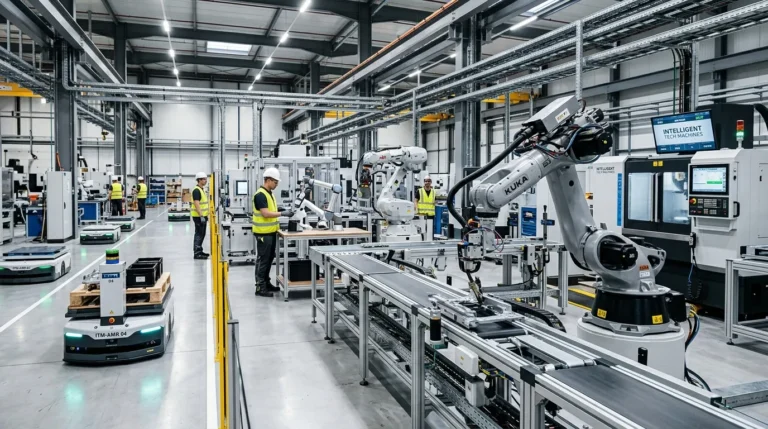
Organizations across industries are embedding AI into core operations. In healthcare, AI assists in diagnostics and treatment planning. In finance, it powers fraud detection and algorithmic trading. In manufacturing, predictive models optimize supply chains and maintenance schedules.
Generative AI expands this impact significantly. Large language models developed by companies such as OpenAI can generate human like responses, draft reports, summarize complex documents, and automate customer interactions. These systems rely on deep neural networks trained on vast datasets to understand context and structure.
The shift from automation to augmentation is critical. Rather than replacing human workers, AI increasingly acts as a collaborative assistant. Professionals use AI tools to accelerate research, enhance creativity, and reduce repetitive tasks. Engineers generate code more efficiently. Marketers draft campaigns faster. Analysts synthesize large datasets in seconds.
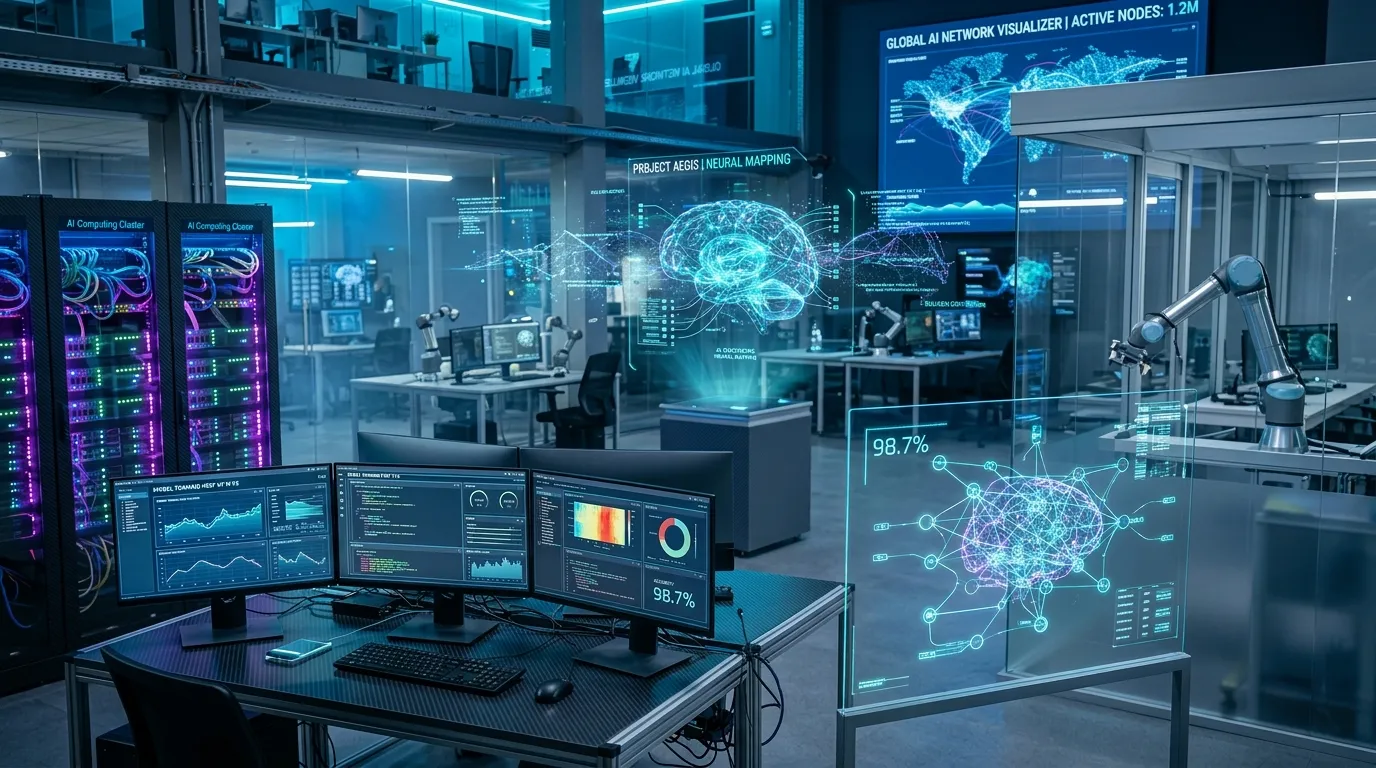
The foundation of modern AI lies in machine learning and deep learning architectures. These models learn from data rather than relying solely on predefined rules. As computational power and data availability have grown, model capabilities have expanded dramatically.
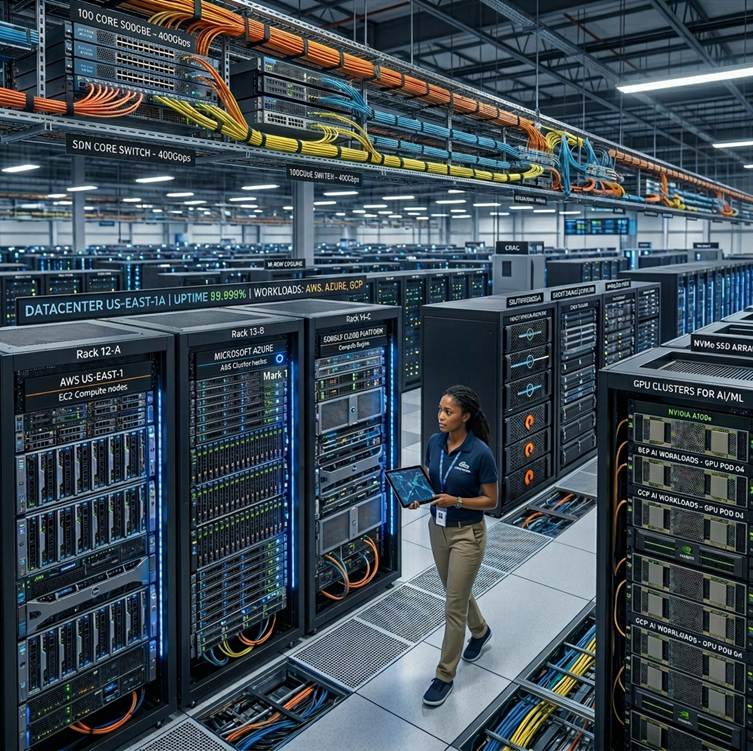
Cloud infrastructure plays a central role in scaling AI systems. Providers like Microsoft and Google offer AI development platforms, model training environments, and scalable computing resources that enable enterprise deployment.
Despite its promise, AI presents complex challenges.
Bias remains a critical concern. AI systems trained on incomplete or skewed datasets may generate unfair or inaccurate results. Transparency is another issue. Many deep learning models function as “black boxes,” making it difficult to interpret decision pathways.
Security risks are also emerging. Generative AI can be misused to create deepfakes, automate phishing campaigns, or generate misinformation at scale. Safeguards and governance frameworks are essential.
Key considerations for responsible AI adoption include:
- Transparent model training processes
- Bias detection and mitigation
- Data privacy compliance
- Human oversight in high impact decisions
- Continuous model monitoring
The future of AI will likely emphasize multimodal intelligence systems capable of processing text, images, audio, and video simultaneously. These integrated models will power more sophisticated virtual assistants and real-time analytics tools.
Another growing area is AI-driven automation of complex workflows. Intelligent agents can coordinate tasks across enterprise systems, making dynamic decisions based on real-time data inputs.
Ultimately, AI and generative AI are redefining productivity and creativity. They blur the boundaries between human and machine capabilities, enabling new forms of collaboration.
The organizations that thrive in this new era will not view AI as a standalone tool, but as a strategic capability embedded across operations.
Artificial intelligence is no longer a distant innovation it is becoming the foundation of modern digital ecosystems.