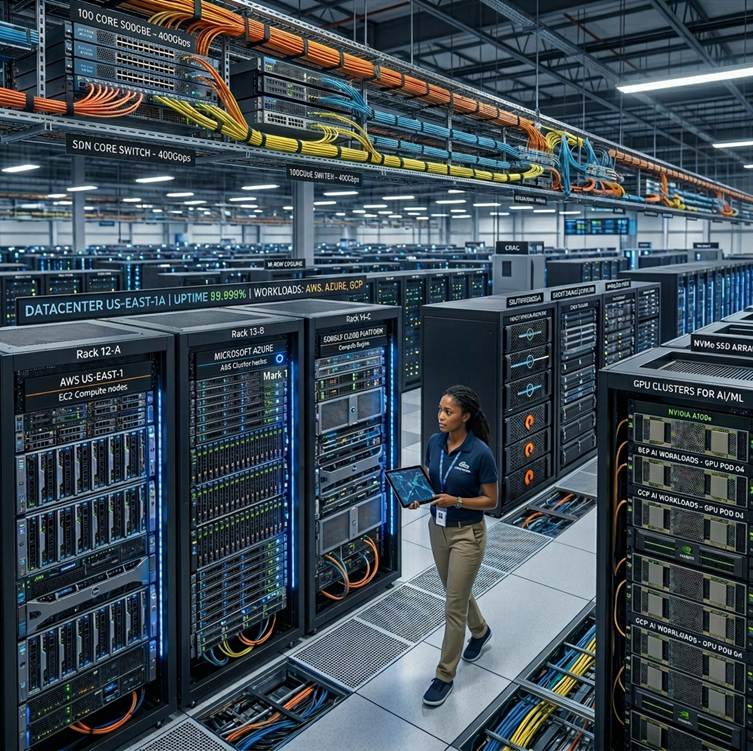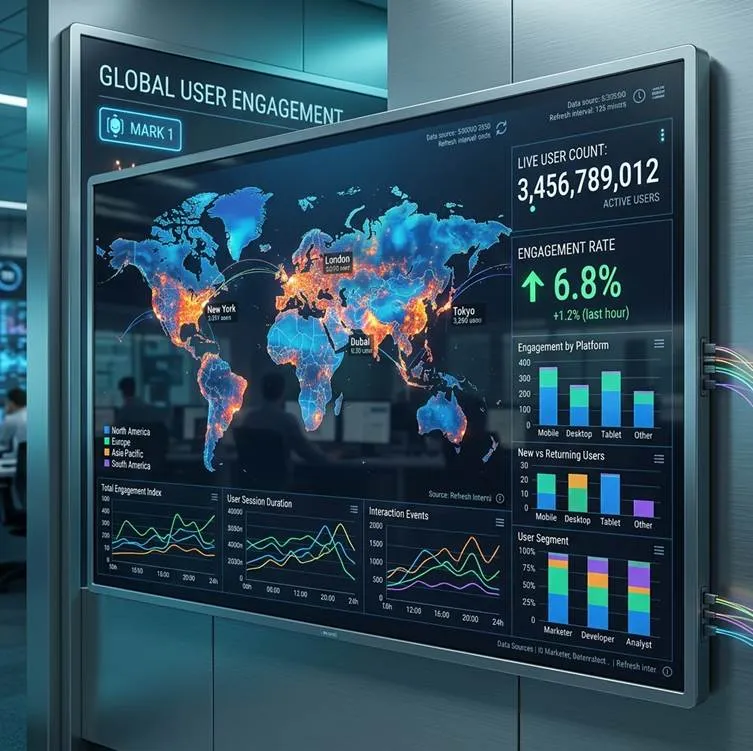


Cloud architecture is the structural blueprint that determines how applications, services, and infrastructure components interact within a cloud environment. While cloud computing provides the raw capabilities compute, storage, networking, managed services architecture determines whether those capabilities are used efficiently, securely, and resiliently.
In traditional data centers, architecture often evolved organically. Servers were added when needed. Databases were scaled vertically. Redundancy was expensive and therefore limited. Cloud environments demand a different mindset. Systems must be intentionally designed to scale horizontally, tolerate failure, and adapt dynamically.
Cloud architecture is not just about connecting services. It is about designing for uncertainty.
Designing for Failure as a First Principle
One of the most important philosophical shifts in cloud architecture is the assumption that failure will occur. Hardware fails. Network links degrade. Power outages happen. Software crashes. Human error introduces misconfigurations. Rather than attempting to eliminate all failure, modern architecture accepts it as inevitable and designs around it.
Cloud providers organize their infrastructure into regions and availability zones. A region represents a broad geographic area, while availability zones are physically isolated data centers within that region. Each availability zone operates independently, with separate power, cooling, and networking. By distributing workloads across multiple zones, applications remain operational even if one zone becomes unavailable.
This approach creates resilience through redundancy.
Instead of running a critical application on a single server, architects deploy multiple instances across zones. Traffic is routed through load balancers, which automatically detect unhealthy instances and redirect requests. Health checks continuously monitor system components, enabling automated recovery mechanisms.
The result is an architecture that does not collapse under localized failure.
Horizontal Scaling vs Vertical Scaling
Traditional systems often relied on vertical scaling increasing the CPU, memory, or storage capacity of a single machine. While this approach works initially, it introduces limitations. There is always a maximum capacity for a single server. Hardware upgrades also require downtime and financial investment.
Cloud architecture encourages horizontal scaling instead. Rather than making one server more powerful, multiple servers are deployed to share the workload. This model improves scalability and resilience simultaneously. If one instance fails, others continue serving traffic.
Horizontal scaling is enabled through stateless application design. Stateless applications do not store session data locally. Instead, they rely on distributed storage systems or managed databases. This ensures that any instance can handle any request, enabling seamless scaling.
The Role of Load Balancing
Load balancing is central to scalable cloud architecture. A load balancer distributes incoming requests across multiple backend instances based on health and availability. It ensures no single instance becomes a bottleneck.
Modern load balancers also support advanced routing capabilities. They can direct traffic based on geographic location, URL paths, or application versions. This enables blue-green deployments, canary releases, and multi-region routing strategies.
Without intelligent traffic distribution, scaling alone cannot guarantee performance.
Automation as an Architectural Layer
Automation is not an optional enhancement in cloud architecture it is foundational. Auto scaling groups dynamically adjust the number of running instances based on metrics such as CPU utilization, request rate, or custom performance indicators. Monitoring systems track health continuously, generating alerts or triggering remediation workflows.
Infrastructure as Code further reinforces automation. Rather than manually configuring environments, architects define infrastructure in declarative configuration files. This ensures consistency across development, staging, and production environments.
Automation reduces operational overhead and improves reliability. Systems become self-adjusting rather than manually maintained.
Data Architecture in the Cloud
Application architecture cannot be separated from data architecture. Cloud environments offer multiple storage models, each optimized for different workloads. Object storage systems provide durable, scalable storage for static assets and backups. Relational databases support structured transactional workloads. NoSQL databases enable flexible schema design and high throughput.
Data replication enhances resilience. Managed database services often replicate data across availability zones automatically. Some architectures extend replication across regions for disaster recovery.
Architects must consider consistency models, latency requirements, and backup strategies when designing data layers. Improper data architecture can undermine even the most scalable application layer.
Security by Architectural Design
Security is most effective when embedded into architecture rather than applied retroactively. Cloud environments provide Virtual Private Clouds (VPCs) that isolate workloads within logical networks. Subnets, route tables, and security groups define traffic boundaries.
Architectural security considerations include network segmentation, least privilege access policies, encryption standards, and monitoring integration. By designing secure connectivity pathways from the outset, organizations reduce attack surfaces significantly.
Identity and access management becomes central in cloud architecture. Every service interaction can be governed through role-based policies, minimizing exposure to credential misuse.
Observability and Feedback Loops
Architecture does not end with deployment. Observability the ability to understand system behavior through metrics, logs, and traces is critical. Monitoring tools provide real time visibility into performance trends and anomalies.
Architects design feedback loops that allow systems to respond dynamically. For example, if monitoring detects rising latency, auto scaling policies can trigger additional instance provisioning. If unusual activity is detected, security systems can isolate affected components automatically.
This continuous feedback transforms architecture into a living system rather than a static diagram.
Core Components of Modern Cloud Architecture
- Multi zone deployment to eliminate single points of failure
- Load balancing layers for traffic distribution and fault isolation
- Auto scaling mechanisms to respond dynamically to demand
- Stateless application design for horizontal scalability
- Distributed data storage for durability and availability
- Network segmentation for enhanced security
These components interact to create systems that are resilient, adaptable, and efficient.
Multi-Region and Disaster Recovery Strategies
For mission-critical systems, multi region deployment provides additional resilience. If an entire geographic region becomes unavailable, traffic can be routed to a secondary region. This requires careful planning, including data replication strategies and DNS routing policies.
Disaster recovery strategies are typically defined by Recovery Time Objective (RTO) and Recovery Point Objective (RPO). RTO specifies how quickly systems must be restored, while RPO defines acceptable data loss.
Cloud platforms enable flexible disaster recovery configurations, ranging from warm standby environments to fully active active multi region deployments.
Performance Optimization and Cost Efficiency
Scalability does not guarantee efficiency. Architects must balance performance and cost. Overprovisioning wastes resources, while underprovisioning degrades user experience.
Cloud cost optimization involves selecting appropriate instance types, implementing auto scaling thresholds, and leveraging reserved or spot pricing models. Architecture must consider not only reliability and performance but also financial sustainability.
Architectural Evolution and Continuous Improvement
Cloud architecture is not static. As application usage grows, patterns evolve. Microservices architectures replace monolithic systems. Containers and orchestration platforms enhance deployment flexibility. Serverless computing abstracts infrastructure further.
Architects must embrace iterative improvement. Continuous integration and deployment pipelines enable rapid experimentation and refinement. Monitoring insights inform optimization decisions.
In cloud environments, architecture is dynamic and adaptive.
Conclusion
Cloud architecture is the discipline of designing systems that scale seamlessly, tolerate failure gracefully, and operate efficiently under changing conditions. It requires a shift in mindset from hardware centric thinking to distributed, automated design principles.
By embracing redundancy, horizontal scaling, automation, and security by design, organizations can build infrastructure that not only supports growth but enables it.
Cloud architecture is not about preventing failure it is about ensuring that failure does not disrupt progress.