

Cybersecurity is no longer solely about defending against known threats. In an environment where attackers continuously evolve their techniques, organizations must move beyond reactive defenses. Waiting for an incident to occur before responding is no longer sufficient. This is where Cyber Threat Intelligence (CTI) becomes essential.
Cyber threat intelligence involves collecting, analyzing, and interpreting information about potential or existing cyber threats. Rather than focusing only on internal vulnerabilities, threat intelligence examines the broader threat landscape — including attacker behavior, emerging malware, new exploitation techniques, and geopolitical cyber risks.
The goal is proactive defense.
Threat intelligence transforms cybersecurity from a reactive posture to an informed strategy. By understanding how attackers operate, organizations can anticipate potential attack paths and strengthen defenses before damage occurs.
Threat intelligence data comes from multiple sources. These may include:
- Indicators of compromise (IOCs) such as malicious IP addresses and file hashes
- Open-source intelligence (OSINT) gathered from public reports and forums
- Commercial intelligence feeds
- Government and industry security advisories
- Internal security logs and monitoring data
Raw data alone is not enough. The true value lies in analysis. Security teams must interpret information within the context of their specific environment. For example, a vulnerability affecting financial systems may be more critical for a banking institution than for a manufacturing company.
Threat intelligence is often categorized into three levels:
- Strategic intelligence – high-level insights about trends, motivations, and threat actors.
- Tactical intelligence – information about specific attack methods and techniques.
- Operational intelligence – real-time data that can immediately inform defensive actions.
Strategic intelligence supports executive decision-making and long-term planning. Tactical intelligence informs technical defenses. Operational intelligence directly supports security operations centers (SOCs) in detecting and responding to incidents.
One major benefit of threat intelligence is faster detection. By integrating intelligence feeds into monitoring systems, organizations can identify suspicious activity more quickly. For example, if a known malicious IP address attempts to access a network, alerts can trigger automatically.
Threat intelligence also improves incident response. Understanding attacker tactics, techniques, and procedures (TTPs) helps security teams investigate breaches more effectively. Instead of searching blindly, teams can focus on likely indicators.
Another advantage is prioritization. Not all vulnerabilities pose equal risk. Threat intelligence allows organizations to prioritize patching and remediation efforts based on active exploitation trends rather than theoretical severity alone.
Key benefits of cyber threat intelligence include:
- Improved early detection of attacks
- Enhanced incident response capabilities
- Better prioritization of security investments
- Increased situational awareness
- Stronger collaboration across security teams
Collaboration is particularly important. Threat intelligence sharing across industries helps organizations defend against common adversaries. Many industries maintain Information Sharing and Analysis Centers (ISACs) to exchange threat data securely.
However, implementing effective threat intelligence programs requires resources and expertise. Organizations must filter relevant information from large volumes of data. Overloading security teams with unverified alerts can create noise rather than clarity.
Automation plays a growing role in threat intelligence. Security orchestration platforms integrate intelligence feeds with detection systems, enabling automated blocking of known malicious indicators.
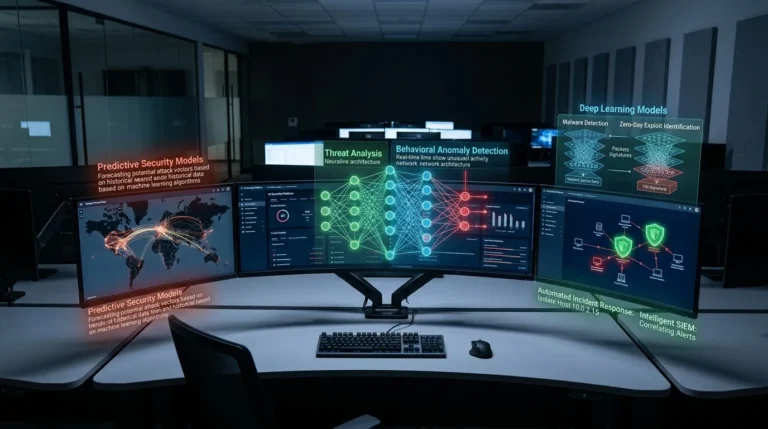
Artificial intelligence is also shaping the future of threat intelligence. Machine learning models can identify patterns in large datasets that may indicate coordinated attack campaigns or emerging threats.
Cyber threat intelligence does not eliminate risk, but it significantly improves preparedness. Instead of reacting to incidents blindly, organizations operate with informed awareness.
In a rapidly evolving threat landscape, information becomes a strategic advantage. By understanding adversaries, anticipating attack methods, and adapting defenses proactively, organizations strengthen resilience and reduce the likelihood of catastrophic breaches.
Threat intelligence turns uncertainty into insight — and insight into action.