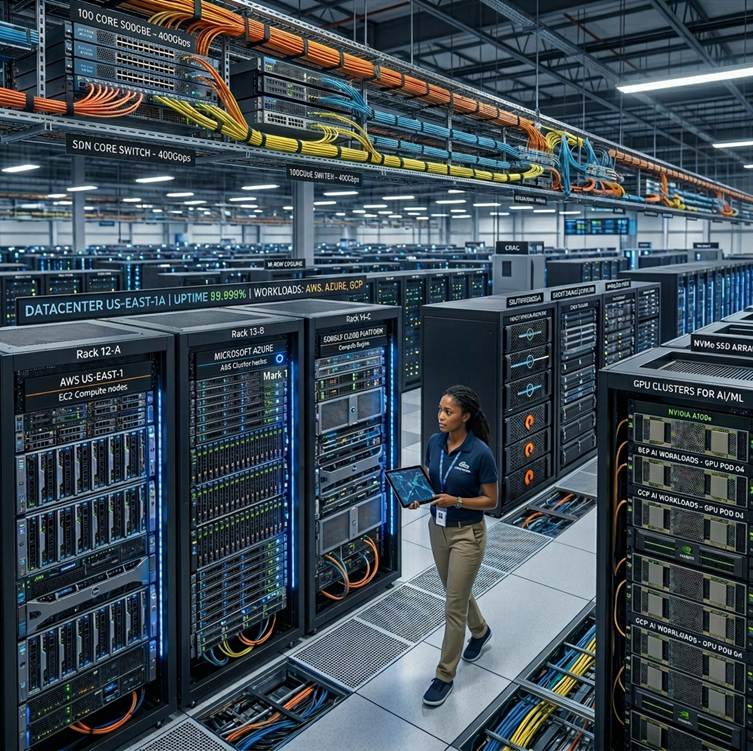


As organizations expand digital operations, the ability to integrate and scale data across platforms has become a central strategic priority. Modern data architecture is no longer just an IT concern — it is a foundational enabler of analytics, artificial intelligence, and real-time decision-making.
Enterprises often operate with fragmented systems accumulated over years of technological evolution. Legacy databases, cloud applications, SaaS platforms, and IoT devices generate data in diverse formats and structures. Without cohesive integration, valuable insights remain siloed.
Modern data architecture focuses on unifying these sources into scalable environments that support advanced analytics. Cloud-native data lakes and distributed processing frameworks enable organizations to centralize structured and unstructured data for comprehensive analysis.
Technology providers such as Snowflake and Databricks offer cloud-based data platforms designed to handle high-volume workloads while maintaining performance efficiency.
Key components of modern data architecture include:
- Cloud-based data lakes
- Data warehouses optimized for analytics
- Real-time data pipelines
- API-driven integration layers
- Metadata management systems
Cloud infrastructure plays a pivotal role in scalability. Platforms such as Amazon Web Services and Google Cloud provide elastic computing resources that adjust dynamically based on processing demand.
Data integration tools connect disparate systems and ensure consistent data flows. Extract, transform, and load (ETL) processes standardize formats and maintain quality across sources.
Scalability has become especially important as AI adoption grows. Machine learning models require access to large, well-structured datasets. Without integrated architecture, model training and inference performance may suffer.
Data fabric and data mesh approaches are gaining attention. These architectural models emphasize decentralized ownership while maintaining unified governance standards.
Key benefits of modern data architecture include:
- Improved cross-department visibility
- Faster analytics deployment
- Enhanced AI model performance
- Reduced infrastructure bottlenecks
- Greater operational agility
However, implementation requires careful planning. Migrating from legacy systems to cloud-native environments involves cost considerations and change management.
Security remains integral to architectural design. Access controls, encryption, and monitoring systems must be embedded within integration pipelines.
Governance frameworks ensure that integrated data remains compliant with regulatory requirements.
Cost optimization is another factor. Scalable cloud platforms allow organizations to pay for usage dynamically, but inefficient resource allocation can increase expenses.
Industry analysts observe that organizations investing in modern data architecture achieve faster time-to-insight and stronger competitive positioning.
The convergence of analytics, AI, and real-time data demands flexible, resilient infrastructure capable of evolving with business needs.
As digital ecosystems grow increasingly complex, integration maturity directly influences innovation capacity.
Modern data architecture transforms isolated datasets into unified strategic assets.
Enterprises that prioritize scalable integration frameworks build stronger analytical foundations, enabling predictive modeling, personalization, and operational efficiency at scale.
In a data-driven economy, architecture determines agility. Organizations that modernize integration capabilities position themselves for sustained growth and intelligent decision-making.