
Data, AI & Analytics • 23 hours ago • Neha Jamwal
Most enterprises have spent years building sophisticated data platforms, business intelligence dashboards, machine learning models, and automation engines. Despite these investments, one critical problem remains unresolved. Information exists. Insights exist. Artificial Intelligence exists.
But decision-making remains fragmented.
Executives rely on dashboards. Operations teams depend on workflows. AI models generate recommendations. Business users apply personal experience. Each operates independently, often producing inconsistent actions across the organization. The next evolution of enterprise intelligence is not another analytics platform or another AI model.
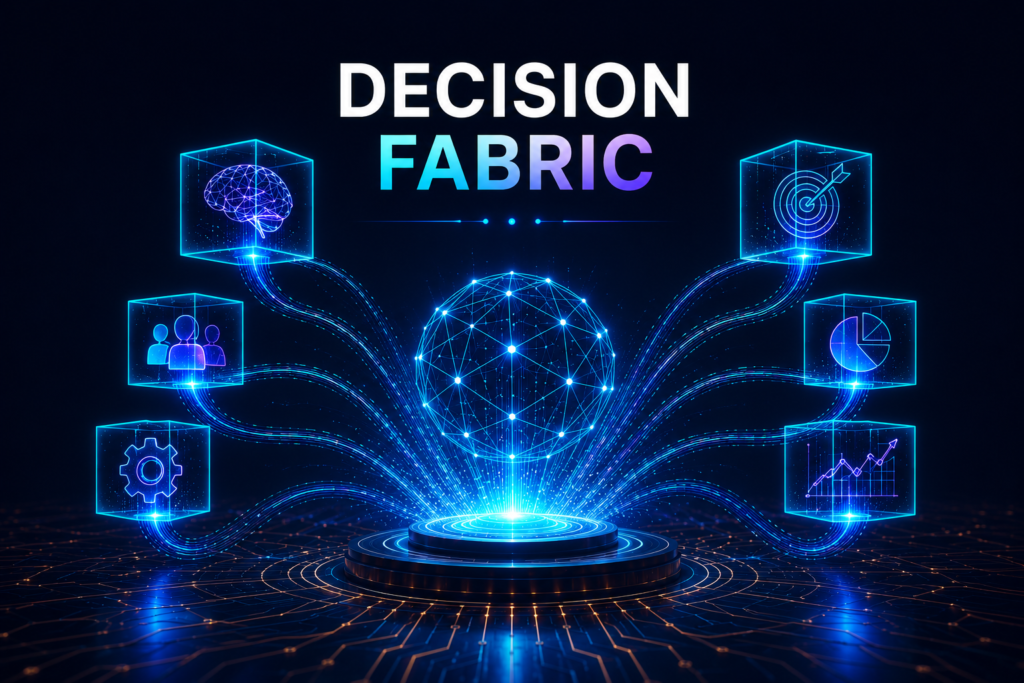
It is the Decision Fabric—an architectural layer that connects enterprise data, AI predictions, business rules, historical outcomes, and human expertise into a unified decision ecosystem. Rather than simply providing information, a Decision Fabric orchestrates how decisions are made, ensuring consistency, transparency, and continuous improvement across the enterprise. As organizations embrace autonomous operations and AI-assisted workflows, Decision Fabric may become the defining architecture behind intelligent businesses.
What Is a Decision Fabric?
A Decision Fabric is an intelligent orchestration layer that integrates data, analytics, AI models, business policies, and human inputs into a single decision-making framework. Instead of allowing departments to make isolated decisions, the fabric creates a shared intelligence network. Every recommendation benefits from multiple perspectives:
- Historical data
- Predictive AI
- Business policies
- Operational constraints
- Customer context
- Organizational objectives
- Previous outcomes
- Human approvals
The result is a decision process that is smarter, more explainable, and more consistent.
Why Data Alone Does Not Create Better Decisions
Organizations often assume that more data automatically leads to better outcomes. In reality, excessive information frequently creates analysis paralysis. Different teams interpret identical information differently. One manager prioritizes revenue. Another prioritizes customer satisfaction. Another focuses on operational efficiency. Without a coordinated framework, data generates multiple competing conclusions. A Decision Fabric aligns these perspectives through governed business logic and intelligent orchestration. Data becomes actionable rather than overwhelming.
Connecting AI With Business Reality
AI models excel at identifying patterns. Businesses operate under constraints. An AI model may recommend maximizing inventory for demand forecasting. Finance may require lower working capital. Operations may face warehouse limitations. Sustainability teams may seek waste reduction. A Decision Fabric evaluates these competing priorities before presenting recommendations. AI becomes context-aware rather than statistically optimized. Enterprise intelligence becomes practical.
Every Decision Creates New Intelligence
Traditional analytics focuses on historical reporting. Decision Fabric introduces continuous learning. Every decision is captured. Every outcome is measured. Every recommendation is evaluated. The system learns which decisions produced positive business results and refines future recommendations accordingly. Enterprise intelligence evolves through experience. The organization develops institutional memory.
Eliminating Decision Silos
Departments often optimize for local objectives instead of enterprise goals. Sales pursues growth. Finance protects margins. Operations maximize efficiency. Customer support focuses on satisfaction. Decision Fabric connects these priorities through shared intelligence. Recommendations consider enterprise-wide impact instead of isolated departmental metrics. Collaboration becomes embedded within decision-making.
AI Agents Become Enterprise Coordinators
Future AI agents will not simply answer questions. They will coordinate actions. Approve workflows. Allocate resources. Recommend investments. Escalate risks. To perform these responsibilities effectively, AI agents require more than data. They require an enterprise decision framework. Decision Fabric provides the policies, context, governance, and historical understanding necessary for intelligent coordination. Automation evolves into orchestration.
Explainability Builds Executive Trust
Executives increasingly demand transparency from AI. A recommendation without reasoning creates hesitation. Decision Fabric documents every contributing factor. Leaders can understand:
- Which datasets influenced the recommendation
- Which business rules applied
- Which AI models contributed
- Which assumptions were considered
- Which historical outcomes informed the decision
- Which stakeholders participated
Transparency transforms AI from a black box into a trusted advisor.
Building a Decision Fabric Strategy
Organizations should focus on:
- Unified business rules
- AI orchestration
- Metadata integration
- Decision logging
- Outcome tracking
- Business glossary alignment
- Human approval workflows
- Governance automation
- Policy management
- Continuous optimization
The objective is not automating every decision. It is improving every decision.
Why Decision Fabric Will Become a Competitive Advantage
AI models will become widely accessible. Cloud infrastructure will become standardized. Analytics platforms will become commoditized. The true differentiator will be how organizations combine intelligence with decision execution. Companies with mature Decision Fabrics will respond faster, learn continuously, reduce inconsistency, and create enterprise-wide alignment. Their competitive advantage will not come from knowing more. It will come from deciding better.
Conclusion
The next frontier of enterprise AI is not collecting more data or building larger models. It is creating an intelligent system that connects information, AI, governance, business rules, and human expertise into a unified decision ecosystem. Decision Fabric represents this evolution. It transforms isolated insights into coordinated enterprise action.
As AI becomes embedded in every business function, organizations that invest in decision orchestration will unlock greater agility, stronger governance, and more consistent outcomes. In the future of B2B Data and Analytics, success will not belong to the organizations with the most information. It will belong to those with the smartest decision fabric.