
Digital Transformation • 8 days ago • Melvin Hall
For years, digital transformation was synonymous with technology investment. Organizations migrated to the cloud, implemented enterprise applications, deployed automation tools, and introduced artificial intelligence into their workflows. Yet despite these initiatives, many transformation programs failed to deliver sustainable business value.
The reason is surprisingly simple. Technology changes quickly. Organizations do not.
Digital transformation succeeds only when technology is accompanied by a new way of operating. This has given rise to one of the most important concepts in enterprise strategy—the Digital Operating Model.
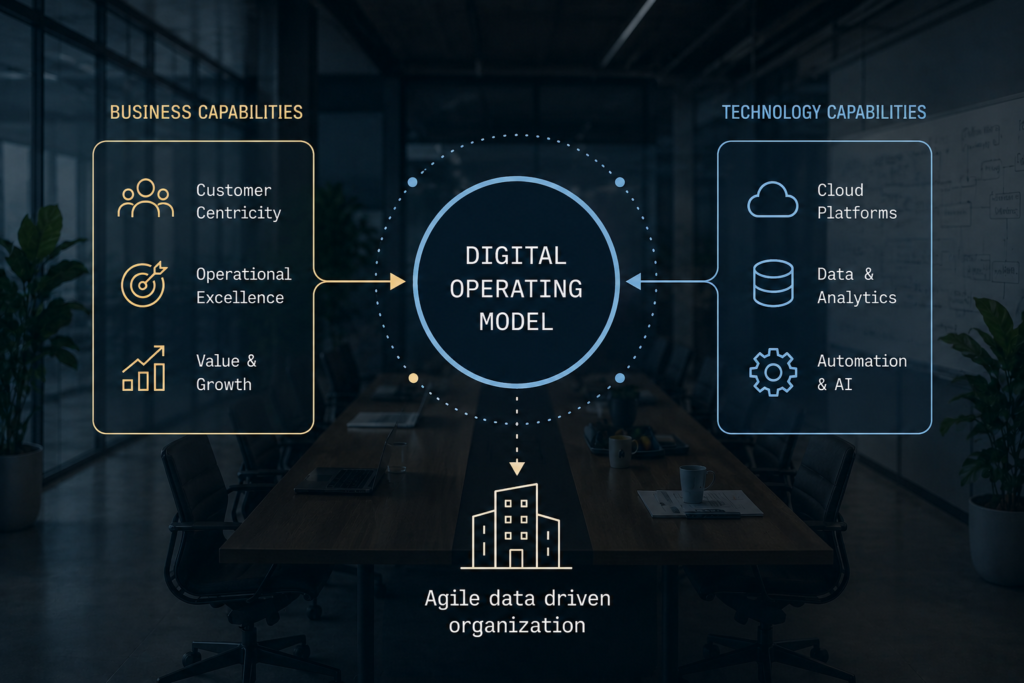
A Digital Operating Model defines how people, processes, data, technology, governance, and decision-making work together in a digitally enabled organization. It is not another software platform. It is the blueprint that determines how an enterprise functions in a constantly evolving business environment. Companies that master this operating model move faster, innovate more consistently, and adapt to change without disrupting business continuity. The future of digital transformation will not be determined by who owns the latest technology. It will be determined by who builds the smartest operating model.
What Is a Digital Operating Model?
A Digital Operating Model is a structured framework that aligns business capabilities with technology capabilities to create an agile, data-driven organization. Instead of treating departments as isolated functions, the model connects them through shared objectives, standardized processes, and intelligent collaboration. It integrates:
- Business strategy
- Digital platforms
- Enterprise data
- Automation
- Artificial intelligence
- Governance
- Customer experience
- Workforce collaboration
- Continuous improvement
- Decision intelligence
Rather than optimizing individual functions, the model optimizes the enterprise as a whole.
Why Technology Alone Cannot Transform an Organization
Many transformation initiatives focus heavily on acquiring new platforms. However, deploying software without changing operational behavior simply digitizes existing inefficiencies. Legacy approval chains remain. Siloed departments continue to operate independently. Manual decision-making slows execution. Disconnected data limits visibility. Technology amplifies the operating model already in place. If the operating model is inefficient, digital tools merely accelerate inefficiency. Transformation begins with organizational design rather than software implementation.
The Shift From Functional Silos to Value Streams
Traditional enterprises are organized around departments. Marketing focuses on campaigns. Sales manages opportunities. Operations handles delivery. Finance controls budgets. Customers, however, experience the organization as a single journey.
A Digital Operating Model replaces fragmented functions with connected value streams that span multiple business units. Cross-functional collaboration becomes the default rather than the exception. Information flows continuously instead of stopping at departmental boundaries. This alignment improves responsiveness and customer satisfaction.
Data Becomes an Operating Asset
Many organizations view data as a reporting resource. Modern digital enterprises treat data as an operational capability. Every process generates intelligence. Every interaction creates feedback. Every decision enriches organizational knowledge.
When data becomes embedded within operational workflows, organizations transition from reactive management to proactive execution. Real-time visibility enables faster adaptation and stronger business resilience.
AI Strengthens the Operating Model
Artificial Intelligence should not operate independently from business processes. Its greatest value emerges when integrated into the Digital Operating Model. AI can prioritize customer requests, optimize supply chains, recommend pricing strategies, identify operational risks, and support employee decision-making. Yet these recommendations require governance, accountability, and business context. The operating model provides the structure within which AI delivers measurable value. Technology supports operations instead of replacing them.
Governance Evolves From Control to Enablement
Traditional governance often focuses on approvals and compliance. Digital organizations require governance that enables innovation while maintaining accountability. An effective Digital Operating Model establishes:
- Clear ownership
- Shared metrics
- Standardized processes
- Data accountability
- AI governance
- Decision transparency
- Continuous monitoring
- Risk management
- Change management
- Performance optimization
Governance becomes a mechanism for acceleration rather than restriction.
Building a Culture of Continuous Adaptation
Digital transformation is not a destination. Business conditions evolve continuously. Customer expectations change. Technology advances. Competitive landscapes shift.
The Digital Operating Model embraces continuous adaptation rather than periodic transformation projects. Organizations develop feedback loops that convert operational insights into process improvements. Transformation becomes an ongoing organizational capability instead of a one-time initiative.
Measuring Success Beyond Technology
Many enterprises measure transformation through technology deployment milestones. A more meaningful approach evaluates business outcomes. Organizations should monitor:
- Decision speed
- Customer experience
- Process efficiency
- Cross-functional collaboration
- Employee productivity
- Operational resilience
- Innovation velocity
- Data quality
- Automation maturity
- Business agility
These indicators reflect whether transformation has become embedded within the organization. True success is measured through operational behavior, not software implementation.
The Competitive Advantage of Operating Model Excellence
Digital technologies are increasingly accessible to every organization. Competitive advantage will come from execution rather than acquisition. Enterprises with mature operating models respond faster to market changes, scale innovation more effectively, and integrate emerging technologies with minimal disruption. Their organizational architecture becomes a strategic differentiator. While competitors invest in individual technologies, these organizations invest in how the entire enterprise operates. That difference compounds over time.
Building a Future-Ready Digital Operating Model
Organizations seeking long-term transformation should prioritize:
- Enterprise-wide process standardization
- Data-driven decision frameworks
- AI integration strategies
- Cross-functional operating teams
- Unified governance models
- Customer-centric value streams
- Digital capability mapping
- Continuous improvement mechanisms
- Workforce enablement
- Outcome-based performance management
The objective is not merely digital adoption. It is an operational reinvention.
Conclusion
Digital transformation has entered a new phase. Technology is no longer the primary differentiator. Operating models are. Organizations that successfully align people, processes, data, AI, and governance within a unified framework create a foundation for continuous innovation and sustainable growth.
The Digital Operating Model transforms isolated digital initiatives into enterprise-wide capabilities that evolve alongside business needs. In the future of B2B digital transformation, the most successful organizations will not necessarily own the most advanced technologies. They will be the ones that know how to operate differently.