
Emerging tech & Deep tech • 1 day ago • Neha Jamwal
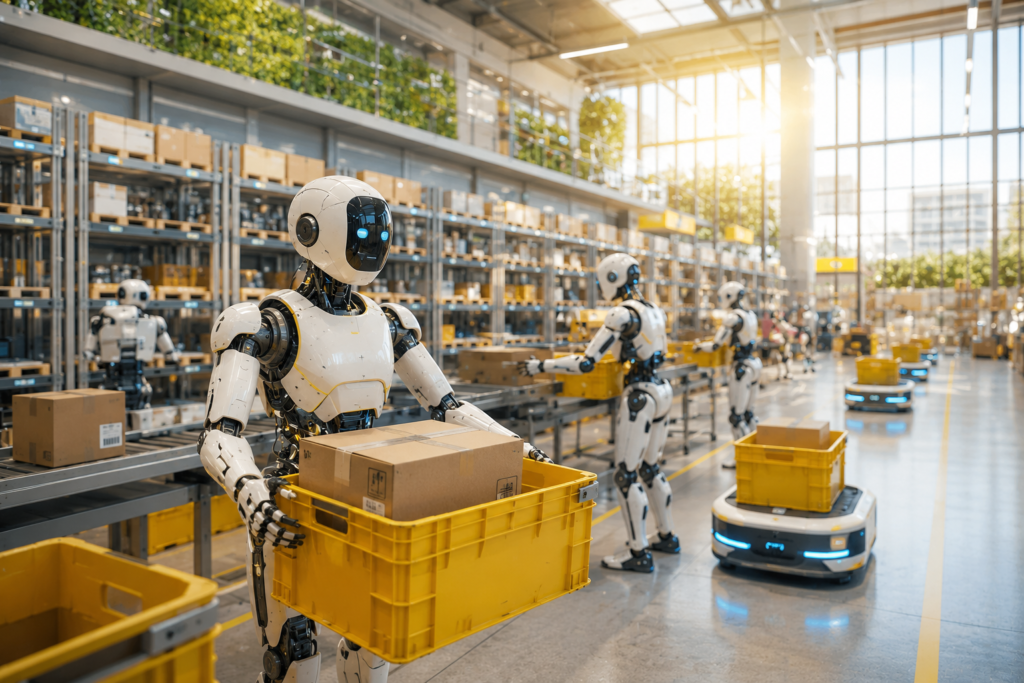
Every industrial revolution has been defined by a new production model. Manufacturing introduced assembly lines that transformed raw materials into finished products at unprecedented scale. Cloud computing enabled software to be delivered as an always-available service. Artificial intelligence is now creating another shift—not by replacing existing production systems, but by introducing an entirely new output that businesses will manufacture continuously: intelligence.
Across industries, organizations are investing heavily in AI models, intelligent applications, automation platforms, and data-driven decision-making. Yet many AI initiatives fail to deliver long-term business value because they remain isolated projects developed by individual teams rather than becoming repeatable enterprise capabilities. Models are trained independently, data pipelines operate in silos, governance varies across departments, and infrastructure is often optimized for experimentation rather than production.
To overcome these challenges, enterprises are increasingly adopting the concept of the AI Factory. Unlike a traditional data center that provides computing resources on demand, an AI factory functions as a production environment where data, infrastructure, machine learning models, governance, and continuous optimization work together to generate intelligence at scale. The objective is no longer simply to build AI systems but to establish an operational framework where intelligence becomes a continuously improving business asset.
Moving Beyond Isolated AI Projects
The first generation of enterprise AI focused primarily on experimentation. Organizations built chatbots, recommendation engines, forecasting models, and predictive analytics solutions to solve specific business problems. While many of these initiatives demonstrated value, they often struggled to scale because every project required its own infrastructure, development process, governance model, and operational support.
As AI adoption expands, this fragmented approach becomes increasingly difficult to manage. Different teams duplicate work, models become inconsistent, operational costs rise, and maintaining compliance across multiple AI systems becomes more complex. The AI factory addresses these challenges by treating AI development as an industrialized process rather than a collection of independent initiatives. Instead of repeatedly building individual solutions from scratch, organizations establish shared platforms capable of supporting hundreds or even thousands of AI applications across the business.
Intelligence Becomes a Business Output
Traditional enterprises measure productivity through the products they manufacture or the services they deliver. AI factories introduce another measurable output: enterprise intelligence. Every customer interaction, operational workflow, financial transaction, application event, and supply chain activity generates information that can improve future decisions. Rather than allowing this data to remain scattered across disconnected systems, AI factories continuously transform operational information into predictions, recommendations, automation, and strategic insights.
This shift fundamentally changes the role of enterprise infrastructure. Data centers are no longer viewed simply as environments that host applications. They become production facilities where business intelligence is continuously generated, refined, and distributed across the organization. As a result, intelligence becomes an operational capability rather than a periodic analytical exercise.
The Foundation of an AI Factory
Although implementations vary across industries, successful AI factories generally share several foundational characteristics.
- Unified enterprise data platforms that continuously ingest and organize information.
- Accelerated computing environments optimized for AI training and inference.
- Automated pipelines that move models from development into production.
- Governance frameworks that monitor model quality, compliance, and responsible AI practices.
- Continuous feedback systems that improve models using real-world operational data.
- Intelligent orchestration platforms that optimize resource allocation automatically.
Rather than operating as isolated technologies, these components form an integrated production ecosystem capable of delivering enterprise-scale AI reliably and efficiently.
Why Infrastructure Alone Is Not Enough
Many organizations assume that investing in faster processors or larger GPU clusters automatically creates AI readiness. In reality, hardware represents only one layer of an AI factory. Without consistent data governance, automated deployment pipelines, model lifecycle management, security controls, and operational monitoring, even the most advanced infrastructure struggles to produce sustainable business value.
The most successful enterprises view AI factories as operating models rather than technology purchases. Infrastructure, software, people, governance, and business strategy evolve together to support continuous intelligence generation. This holistic approach allows organizations to scale AI confidently while maintaining quality, security, and operational resilience.
AI Factories Will Reshape Every Business Function
The influence of AI factories extends well beyond technology teams. Because intelligence becomes a shared enterprise capability, virtually every department benefits from continuous optimization. Marketing teams receive increasingly accurate customer insights. Finance departments improve forecasting and risk analysis. Supply chains become more adaptive to changing market conditions. Human resources optimize workforce planning. Product teams accelerate innovation through predictive analytics, while cybersecurity platforms continuously identify emerging threats before they escalate. Instead of isolated improvements, organizations create an interconnected ecosystem where insights generated in one business function strengthen decision-making across the entire enterprise.
Governance Will Determine Long-Term Success
As AI factories become central to enterprise operations, governance becomes equally important as computational performance. Organizations must establish clear policies for data quality, model transparency, bias detection, regulatory compliance, and security.
Responsible AI practices should be embedded directly into operational workflows rather than added after deployment. Automated monitoring, continuous validation, explainability frameworks, and human oversight help ensure that intelligent systems remain aligned with business objectives while maintaining stakeholder trust. Enterprises that prioritize governance early will be better positioned to scale AI confidently as regulatory expectations continue evolving.
The Competitive Advantage Will Shift from Software to Intelligence
Enterprise software transformed business by digitizing processes. Artificial intelligence is now transforming how those processes continuously improve themselves.
In the coming years, organizations will increasingly compete not simply on the software they deploy but on how effectively they generate, refine, and operationalize intelligence across every aspect of their business. Companies capable of producing high-quality intelligence continuously will innovate faster, respond more effectively to market changes, and make better strategic decisions than competitors relying on fragmented AI initiatives.
This evolution mirrors previous industrial revolutions where production capacity determined market leadership. The difference is that today’s production output is no longer physical goods—it is intelligence itself. AI factories represent the infrastructure, operating model, and governance framework required to produce that intelligence at enterprise scale. As businesses continue integrating AI into every operational layer, organizations that successfully industrialize intelligence will define the next generation of enterprise innovation.