
Digital Transformation • 4 hours ago • Jessica Mahon
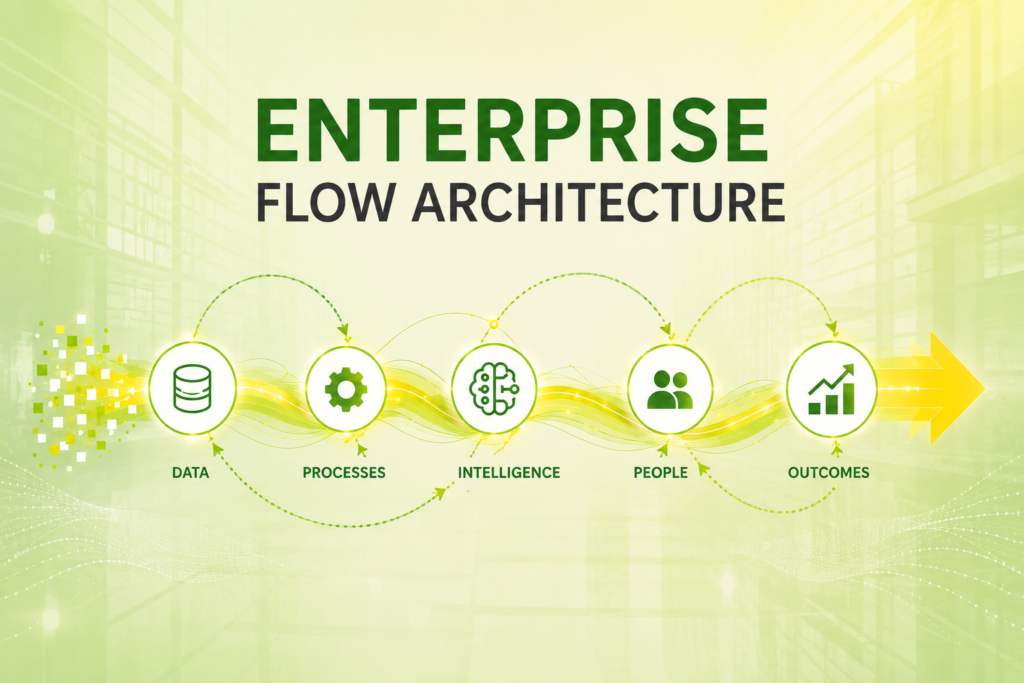
For years, digital transformation has focused on modernizing technology stacks, automating workflows, and migrating workloads to the cloud. Organizations have invested heavily in enterprise applications, data platforms, artificial intelligence, and automation technologies with the expectation that digital maturity would naturally follow.
Yet despite these investments, many enterprises continue to struggle with slow execution, fragmented customer experiences, and disconnected operations.
The reason lies in a fundamental oversight. Organizations optimize systems. They optimize processes. But they rarely optimize flow. Enterprise Flow Architecture is an emerging business discipline that focuses on how information, decisions, work, and value move across an organization. Instead of improving individual components, it improves the movement between them. In an increasingly interconnected digital economy, competitive advantage belongs to organizations that reduce friction rather than simply increase technology. Flow becomes the true engine of transformation.
What Is Enterprise Flow Architecture?
Enterprise Flow Architecture is the design and optimization of how business activities move across people, applications, data platforms, AI services, and operational functions. Unlike traditional architecture, which focuses on technical systems, flow architecture focuses on movement. It answers critical questions:
- How does information travel?
- Where do decisions slow down?
- Which approvals create bottlenecks?
- Where does work become duplicated?
- Which handoffs reduce customer experience?
The objective is continuous, intelligent movement throughout the enterprise.
Why Most Digital Transformation Programs Create New Friction
Organizations often modernize technology without redesigning how work flows. New platforms are introduced. Legacy approvals remain. Departments continue operating independently. Employees manually coordinate between systems. The result is a digital organization with analog operating behavior. Technology accelerates isolated activities while enterprise flow remains constrained. Transformation reaches a plateau because movement, not technology, becomes the limiting factor.
Flow Is More Valuable Than Speed
Many organizations pursue faster processes. Flow architecture pursues uninterrupted processes. A workflow completed quickly but requiring multiple rework cycles creates more friction than a slower process executed correctly the first time. Flow measures continuity. It minimizes waiting. It reduces unnecessary handoffs. It eliminates redundant approvals. The enterprise becomes smoother rather than merely faster.
Information Flow Creates Organizational Intelligence
Information often exists in multiple systems but fails to reach decision-makers when needed. Enterprise Flow Architecture creates intelligent pathways that connect operational events with business action. Customer requests trigger supply chain responses. Operational risks initiate compliance reviews. AI recommendations automatically launch business workflows. Information evolves into coordinated enterprise behavior. The organization becomes responsive instead of reactive.
Artificial Intelligence Depends on Enterprise Flow
Artificial Intelligence generates predictions. Business value comes from execution. If AI identifies a supply chain disruption but procurement, logistics, and finance remain disconnected, the prediction creates limited value. Flow architecture ensures intelligence moves seamlessly into operational action. AI becomes embedded within enterprise execution rather than functioning as an isolated analytical capability. This integration significantly increases return on AI investments.
Customer Experience Is a Reflection of Enterprise Flow
Customers never experience departments. They experience movement. An order passes through sales, finance, fulfillment, logistics, and support. Every delay within internal flow becomes visible externally. Organizations with optimized enterprise flow create experiences that feel effortless. The customer perceives consistency because internal operations move without friction. Digital transformation ultimately becomes customer flow transformation.
Measuring Flow Instead of Functions
Traditional performance metrics focus on departmental efficiency. Flow Architecture measures enterprise movement. Organizations should monitor:
- Decision cycle time
- Process interruptions
- Cross-functional handoffs
- Data latency
- Customer response continuity
- Automation effectiveness
- AI execution success
- Operational synchronization
- Business adaptability
- End-to-end value delivery
These indicators reveal how effectively the enterprise operates as an integrated system.
Governance Through Intelligent Flow
Governance often introduces additional approvals that unintentionally slow innovation. Flow Architecture embeds governance directly into enterprise movement. Policies execute automatically. Business rules apply dynamically. Compliance becomes continuous. Approvals occur only when necessary. Governance protects business outcomes without creating unnecessary operational friction. Control and agility coexist.
Building Enterprise Flow Architecture
Organizations should focus on:
- End-to-end value stream mapping
- Event-driven workflows
- Decision automation
- Unified operational data
- AI-enabled orchestration
- Cross-functional ownership
- Metadata-driven integration
- Continuous flow monitoring
- Business capability alignment
- Operational observability
The objective is not simply digital connectivity. It is an uninterrupted business movement.
Why Enterprise Flow Will Define the Future
Technology will continue evolving. Artificial intelligence will become ubiquitous. Automation will become increasingly autonomous. However, organizations that fail to optimize enterprise flow will continue experiencing operational friction regardless of technological sophistication. Flow Architecture provides the connective tissue that transforms isolated digital investments into coordinated enterprise execution. It enables organizations to respond faster, innovate continuously, and deliver consistent customer experiences. Flow becomes a strategic asset.
Conclusion
Digital transformation is no longer about implementing better technology. It is about enabling better movement across the enterprise. Enterprise Flow Architecture creates a foundation where people, processes, AI, applications, and data operate as a synchronized ecosystem rather than independent components. Organizations that optimize flow reduce complexity, improve decision-making, strengthen customer experiences, and create sustainable competitive advantage. In the next era of B2B digital transformation, success will not belong to organizations with the most technology. It will belong to organizations where value flows without friction.