
Extended Reality (XR) — an umbrella term encompassing Augmented Reality (AR), Virtual Reality (VR), and Mixed Reality (MR) — is redefining how humans interact with digital information. Unlike traditional computing interfaces confined to screens, XR technologies immerse users within digital environments or overlay digital elements onto the physical world.
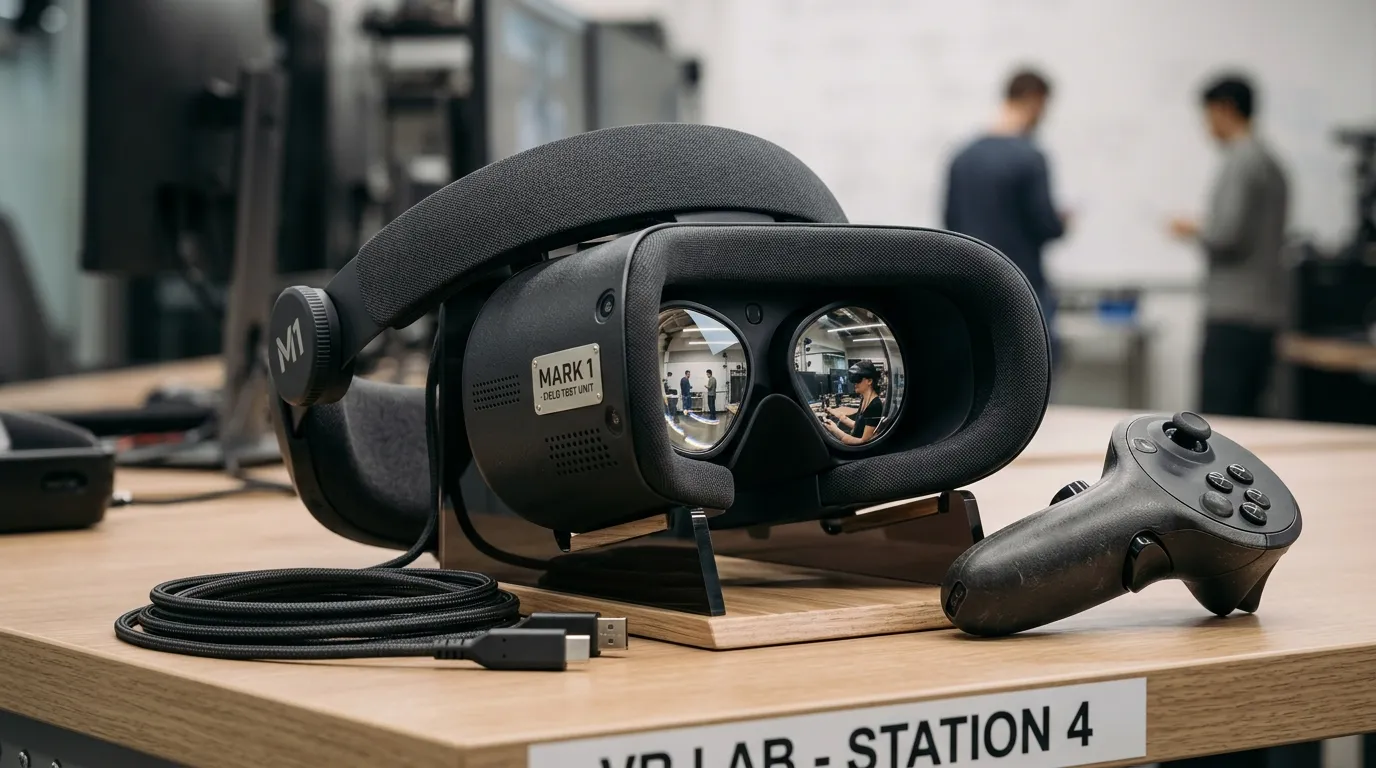
Virtual Reality creates fully immersive digital spaces. Users wear headsets that block out physical surroundings and replace them with computer-generated environments. VR is widely used in gaming, training simulations, and immersive experiences.
Augmented Reality overlays digital information onto the real world. Smartphone applications and wearable devices can display contextual data — such as navigation directions or product information — directly within a user’s field of vision.
Mixed Reality blends physical and digital environments more seamlessly, allowing virtual objects to interact with real-world elements dynamically.
Companies like Meta have invested heavily in immersive technologies, envisioning virtual spaces where collaboration, commerce, and social interaction occur digitally. Meanwhile, Microsoft has developed enterprise-focused mixed reality solutions aimed at industrial training and remote assistance.
XR technology extends far beyond entertainment.
In healthcare, VR simulations help train surgeons in complex procedures without real-world risk. In education, immersive environments enhance experiential learning. In manufacturing, AR headsets provide technicians with real-time instructions during equipment maintenance.
Key components of XR systems include:
- High-resolution display technology
- Motion tracking sensors
- Spatial computing algorithms
- Real-time rendering engines
- Haptic feedback systems
Advancements in computing power and graphics processing enable more realistic simulations. Cloud infrastructure supports large-scale immersive platforms, reducing device-level processing demands.
However, XR adoption faces challenges.
Hardware cost and accessibility remain barriers for mass deployment. Prolonged headset usage may cause discomfort for some users. Content development requires specialized skills in 3D modeling and interaction design.
Privacy considerations also emerge. XR devices collect detailed spatial and behavioral data. Safeguarding this data is essential to maintain trust.
The concept of the metaverse — interconnected digital spaces where users interact through avatars — has driven renewed interest in XR technologies. While the long-term viability of large-scale virtual ecosystems remains uncertain, enterprise applications continue expanding steadily.
Training and simulation represent particularly promising use cases. Immersive learning environments reduce risk and enhance retention compared to traditional instruction methods.
Retail and e-commerce also benefit from AR applications. Customers can visualize products within their homes before purchasing, improving decision confidence.
Key considerations for XR integration include:
- Hardware scalability and cost
- Data security and privacy
- User comfort and accessibility
- Content creation capabilities
- Infrastructure support
As XR technology matures, lightweight wearable devices may replace bulky headsets. Improvements in battery life, display resolution, and spatial mapping will enhance realism.
The convergence of XR with AI further expands possibilities. Intelligent agents within immersive environments can respond to user behavior dynamically, creating more adaptive experiences.
Extended Reality represents a fundamental shift in human-computer interaction. Instead of observing information on flat screens, users engage with data spatially and intuitively.
As immersive technologies evolve, they may redefine communication, collaboration, and digital experience design — bridging the gap between physical and virtual worlds.