
One of the most attractive features of cloud computing is its pay-as-you-go pricing model. Organizations no longer need to invest heavily in hardware upfront. They can provision resources instantly and pay only for what they consume. However, this flexibility introduces a new challenge: without proper oversight, cloud spending can grow unpredictably and rapidly.
In traditional data centers, infrastructure costs were largely fixed. Servers were purchased, depreciated over time, and maintained within defined budgets. In cloud environments, costs are variable, dynamic, and directly tied to usage patterns. Every compute instance, storage request, data transfer, and managed service invocation contributes to monthly expenses.
This shift requires a new operational discipline known as FinOps — Financial Operations.
FinOps is not merely about reducing cloud costs. It is about creating financial accountability in a variable consumption model while enabling innovation and agility.
The Financial Dynamics of the Cloud
Cloud pricing models are designed for flexibility. Resources can be provisioned instantly and scaled automatically. While this empowers engineering teams, it can also obscure cost visibility. Development teams may deploy test environments and forget to shut them down. Auto scaling policies may overprovision capacity. Data transfer charges between regions may accumulate unnoticed.
The cloud does not enforce spending discipline by default.
Organizations must implement structured cost governance processes. Without them, the same elasticity that drives performance can drive overspending.
The complexity of pricing adds to the challenge. Providers such as Amazon Web Services, Microsoft Azure, and Google Cloud Platform offer multiple pricing options, including on-demand instances, reserved capacity, savings plans, and spot instances. Each option has trade-offs between flexibility and cost savings.
Understanding these models is essential for optimization.
What Is FinOps?
FinOps is a cultural and operational framework that brings finance, engineering, and operations teams together to manage cloud spending collaboratively. Rather than treating cost management as a finance-only responsibility, FinOps encourages shared ownership.
Engineering teams gain visibility into the financial impact of architectural decisions. Finance teams gain insight into the technical drivers of spending. Leadership gains real-time understanding of cost trends.
The goal is not simply cost reduction — it is cost optimization aligned with business value.
Visibility: The Foundation of Cost Control
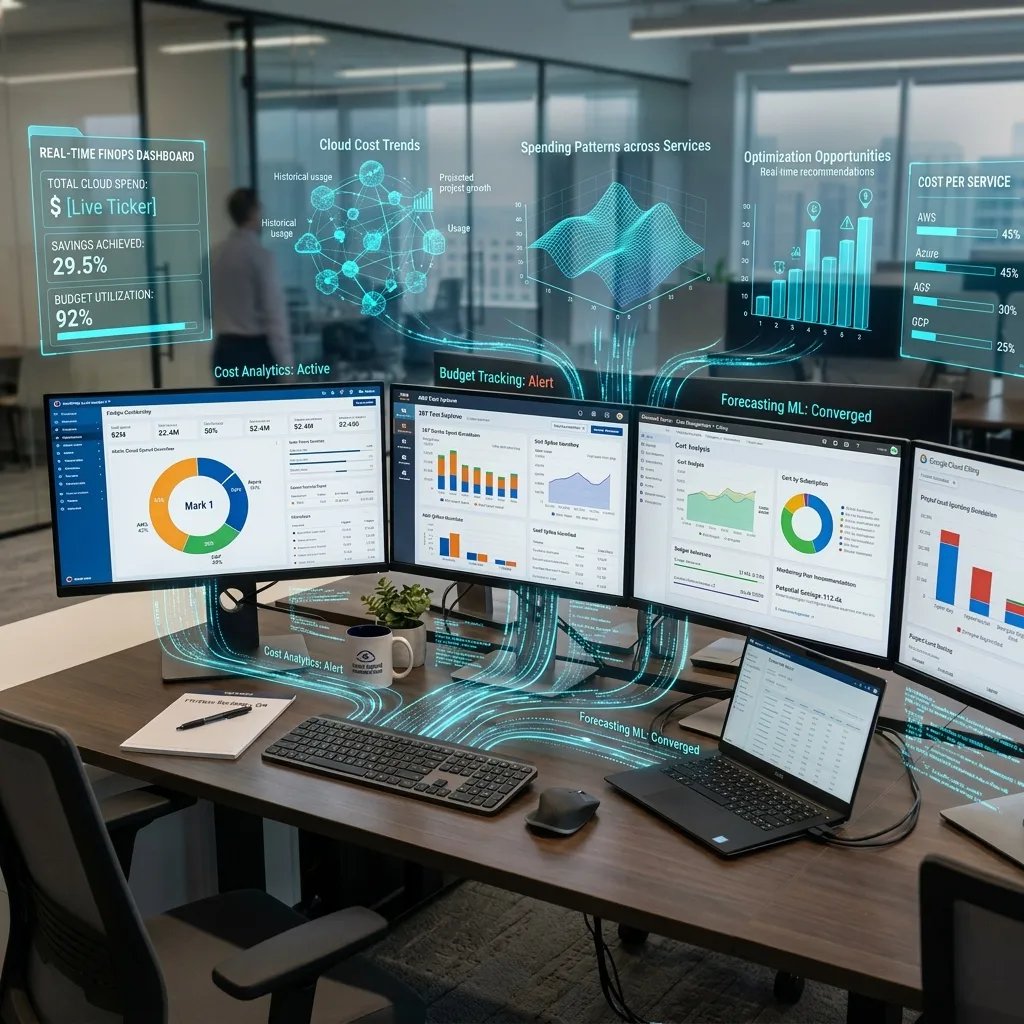
The first step in managing cloud expenses is gaining clear visibility. Detailed billing dashboards, usage reports, and tagging strategies provide insights into which teams, applications, or projects generate costs.
Tagging resources appropriately allows organizations to allocate expenses accurately. Without tagging, cost reports become ambiguous, making accountability difficult.
Visibility transforms cloud cost management from reactive analysis to proactive governance.
Rightsizing and Resource Optimization
One of the most common sources of cloud waste is overprovisioning. Teams often select larger instance types than necessary to avoid performance risk. Over time, these excess allocations accumulate significant cost.
Rightsizing involves analyzing actual usage metrics and adjusting resources accordingly. Underutilized compute instances can be downgraded. Idle storage volumes can be removed. Unused IP addresses can be released.
Auto scaling policies should be reviewed regularly to ensure they reflect realistic demand patterns.
Optimization requires ongoing analysis, not one-time adjustments.
Commitment-Based Discounts
Cloud providers offer discounted pricing models in exchange for usage commitments. Reserved instances or savings plans allow organizations to commit to consistent usage levels over one or three years in return for lower hourly rates.
These models provide substantial cost savings when workloads are predictable. However, inaccurate forecasting can lead to underutilized commitments.
FinOps teams must analyze usage trends carefully before committing to long-term discounts.
Managing Data Transfer Costs
Data transfer charges are often underestimated. Moving data between regions, across availability zones, or out to the internet incurs costs that can escalate quickly.
Architectural decisions significantly influence these expenses. Placing frequently communicating services in different regions may introduce unnecessary transfer fees. Caching strategies and content delivery networks can reduce outbound data transfer costs.
Cost optimization is therefore closely linked to architectural design.
Cultural Shift Toward Cost Awareness
FinOps is not purely technical; it is cultural. Engineers must understand that architectural decisions carry financial implications. Choosing a higher-performance instance type improves latency but increases cost. Replicating databases across regions enhances resilience but doubles storage expenses.
Cost becomes a measurable performance metric alongside latency and reliability.
By fostering cost awareness within engineering teams, organizations promote responsible innovation.
Core Principles of FinOps
- Visibility and transparency across teams
- Shared accountability between finance and engineering
- Continuous optimization, not periodic review
- Alignment of spending with business value
- Automation-driven cost monitoring
These principles ensure sustainable cloud growth.
Automation and Cost Monitoring Tools
Modern cloud environments provide built-in cost monitoring services. Alerts can notify teams when spending exceeds predefined thresholds. Automated scripts can shut down non-production environments outside business hours.
Third-party tools enhance reporting capabilities, offering granular breakdowns and predictive analysis.
Automation reduces manual oversight and ensures consistent enforcement of policies.
Budgeting in Elastic Environments
Traditional budgeting models assume predictable spending. Cloud environments challenge that assumption. Demand fluctuates. New services launch. User growth accelerates.
Dynamic budgeting models allow for controlled flexibility. Budgets can include buffers for innovation while maintaining accountability. Forecasting tools analyze historical trends to predict future spending.
Effective budgeting balances agility with discipline.
The Relationship Between Performance and Cost
Performance optimization and cost optimization are interconnected. Overprovisioning ensures performance but increases expenses. Aggressive cost-cutting may degrade user experience.
FinOps seeks equilibrium. Decisions should weigh cost against business impact. For example, reducing instance size may save money but increase latency. Conversely, investing in performance may increase customer satisfaction and revenue.
Cost optimization should never compromise core business objectives.
Sustainability and Environmental Impact
Cloud cost management increasingly intersects with sustainability initiatives. Efficient resource utilization reduces energy consumption and environmental impact. Many organizations incorporate carbon footprint considerations into infrastructure planning.
Optimizing cloud usage contributes to both financial and environmental responsibility.
The Evolution of FinOps
As cloud adoption deepens, FinOps practices become more sophisticated. Predictive analytics forecast spending based on growth trends. AI-driven tools recommend resource adjustments. Cross-cloud cost aggregation platforms provide unified visibility.
Organizations treat cost data as strategically important as performance data.
FinOps evolves from cost control to financial intelligence.
Conclusion
Cloud computing empowers organizations with unprecedented scalability and agility. However, that flexibility demands financial discipline. FinOps provides the framework to manage spending intelligently without stifling innovation.
By prioritizing visibility, collaboration, automation, and continuous optimization, organizations can align cloud costs with business value. Cost becomes a controllable variable rather than an unpredictable risk.
In elastic environments, financial governance must be as dynamic as the infrastructure itself.
Cloud success is not defined solely by uptime or performance — it is defined by sustainable, optimized growth.