
Emerging tech & Deep tech • 2 days ago • Shruti Das
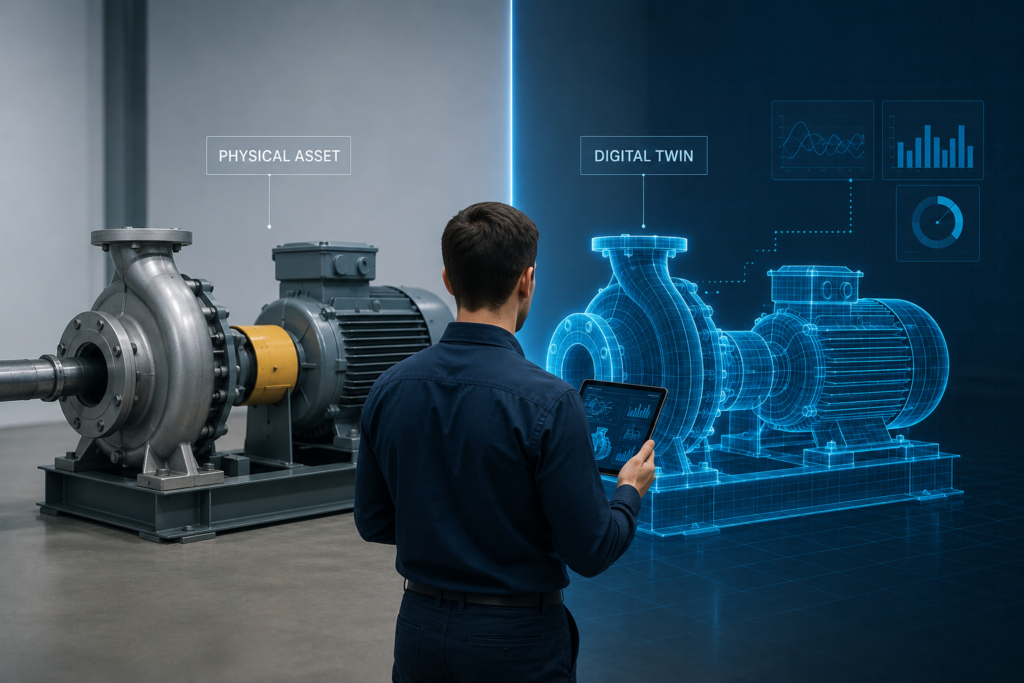
For many years, organizations have used digital models to visualize products, manufacturing equipment, buildings, and operational processes. These models helped engineers improve designs, validate specifications, and reduce implementation risks before physical deployment. Although valuable, most digital models remained static representations that reflected a specific point in time. Once deployed into production, they often became disconnected from the continuously changing environments they were intended to represent.
Enterprise operations have changed dramatically. Modern organizations generate constant streams of operational data through connected machinery, enterprise applications, cloud platforms, supply chain systems, customer interactions, industrial sensors, and intelligent devices. Business environments no longer operate as isolated systems. Every operational decision influences multiple processes across production, logistics, finance, customer service, and infrastructure.
This growing complexity has accelerated the emergence of Industrial Digital Twins, an advanced deep technology that creates continuously evolving digital representations of physical assets, operational processes, and even entire business ecosystems. Unlike traditional simulations that operate independently of real-world activity, Digital Twins remain synchronized with operational environments, allowing organizations to observe, analyze, simulate, and optimize business performance in near real time.
The value of Digital Twins extends well beyond manufacturing. Enterprises are beginning to develop digital representations of supply chains, distribution networks, healthcare systems, energy infrastructure, commercial buildings, transportation networks, and complex operational workflows. These intelligent models allow organizations to evaluate alternative decisions before introducing changes into live environments, reducing uncertainty while improving operational performance. As artificial intelligence, connected devices, cloud computing, and enterprise analytics continue to mature, Digital Twins are evolving into one of the foundational technologies supporting intelligent enterprise operations.
Understanding Industrial Digital Twins
An Industrial Digital Twin is a continuously updated digital representation of a physical asset, operational process, or business system that remains synchronized with its real-world counterpart through ongoing data exchange.
Unlike conventional digital models, which primarily describe how something is designed, a Digital Twin reflects how it behaves throughout its operational lifecycle. Sensors, enterprise applications, connected equipment, and business systems continuously provide information that allows the digital representation to mirror changing conditions with remarkable accuracy. This continuous synchronization transforms the model from a design reference into an operational intelligence platform.
For example, a manufacturing facility may create Digital Twins for production equipment, assembly lines, warehouse operations, inventory movement, energy consumption, and maintenance activities. Each twin receives operational data continuously, enabling engineers to evaluate performance, identify inefficiencies, simulate process improvements, and estimate the consequences of operational changes before implementation.
The same principles apply beyond industrial environments. Financial institutions can model transaction ecosystems. Healthcare providers can simulate hospital operations. Logistics companies can develop Digital Twins representing distribution networks. Retail organizations can model customer fulfillment operations across physical and digital channels. Instead of viewing business operations as disconnected systems, Digital Twins create an integrated operational perspective where relationships between assets, processes, and decisions become significantly easier to understand.
Why Static Models No Longer Meet Enterprise Needs
Business environments change continuously. Equipment ages, customer demand fluctuates, supplier performance varies, regulations evolve, infrastructure expands, and operational priorities shift throughout the day. Traditional models struggle to represent these changing conditions because they are typically updated only during major projects or scheduled reviews. Several trends have accelerated the need for continuously evolving operational models:
- Increasing adoption of connected devices and industrial sensors
- Expansion of cloud-native enterprise platforms
- Greater operational complexity across global supply chains
- Growing demand for predictive maintenance
- Increasing use of artificial intelligence in business operations
- Higher expectations for operational resilience
- Continuous pressure to improve efficiency while reducing operational risk
Digital Twins address these challenges by creating living operational models that evolve alongside the systems they represent.
The Twin Intelligence Framework
One useful way to understand Digital Twins is through what can be viewed as the Twin Intelligence Framework. This conceptual model illustrates how digital representations gradually evolve into intelligent operational systems.
Level 1: Digital Representation The first level consists of static digital models that describe physical assets, facilities, products, or operational processes. Information changes infrequently and primarily supports planning and documentation.
Level 2: Connected Twin Operational data begins flowing into the digital model through sensors, enterprise applications, industrial systems, and connected devices. The twin continuously reflects the current state of the physical environment.
Level 3: Predictive Twin Artificial intelligence analyzes operational data to estimate future conditions such as equipment failures, production delays, resource utilization, customer demand, or supply chain disruptions.
Level 4: Intelligent Twin The Digital Twin evaluates multiple operational scenarios, identifies optimization opportunities, recommends corrective actions, and supports decision-making across interconnected business functions.
Level 5: Autonomous Twin At the highest level, Digital Twins collaborate with enterprise automation platforms, Multi-Agent Enterprise Systems, and Decision Intelligence capabilities to coordinate operational adjustments automatically within established governance boundaries.
The Twin Intelligence Framework demonstrates that Digital Twins evolve from passive visualization tools into active participants in enterprise operations.
How Industrial Digital Twins Work
Although implementations vary across industries, most Digital Twins operate through a continuous operational cycle. The process begins by collecting information from physical assets, enterprise applications, operational platforms, IoT devices, manufacturing systems, cloud services, and business workflows. This information is integrated into a unified digital representation that accurately reflects current operating conditions.
Artificial intelligence then analyzes incoming information to identify patterns, detect anomalies, estimate future performance, and simulate alternative operating scenarios. Decision support systems evaluate possible interventions before recommended actions are presented to engineers, operational leaders, or autonomous enterprise platforms. As operational changes occur, new information continuously updates the twin, allowing the model to improve its accuracy while reflecting the evolving state of the business. A typical Digital Twin lifecycle includes:
- Continuous operational data collection
- Synchronization between physical and digital environments
- Performance monitoring
- Predictive analysis
- Scenario simulation
- Decision evaluation
- Operational optimization
- Continuous learning through operational feedback
This ongoing cycle transforms Digital Twins into intelligent operational companions that evolve alongside the enterprise.
Core Technologies Behind Industrial Digital Twins
Several advanced technologies contribute to modern Digital Twin platforms.
Internet of Things (IoT) Connected sensors and intelligent devices continuously provide operational data describing equipment performance, environmental conditions, asset utilization, and production activities.
Artificial Intelligence AI analyzes operational behavior, identifies patterns, predicts future events, and recommends optimization opportunities across complex business environments.
Cloud Computing Cloud platforms provide scalable computing resources that allow Digital Twins to process large volumes of operational information while supporting collaboration across geographically distributed operations.
Simulation Engines Simulation technologies enable organizations to evaluate alternative operational scenarios before introducing changes into production environments, reducing uncertainty and operational risk.
Enterprise Data Integration Information from ERP systems, manufacturing platforms, supply chain applications, financial systems, and customer platforms creates a unified operational perspective that extends beyond individual assets.
Enterprise Applications
Industrial Digital Twins are expanding rapidly across industries because they provide value wherever physical operations and digital intelligence intersect.
Manufacturing Manufacturers can continuously optimize production scheduling, equipment utilization, maintenance planning, energy consumption, quality assurance, and workforce allocation through synchronized operational models.
Supply Chain Operations Digital Twins representing logistics networks, warehouses, transportation systems, suppliers, and inventory flows help organizations evaluate disruptions, optimize routing strategies, and improve end-to-end operational visibility.
Energy and Utilities Utility providers can simulate energy distribution networks, monitor infrastructure health, forecast demand, and evaluate maintenance strategies before introducing operational changes.
Healthcare Hospitals can develop Digital Twins representing patient flow, facility utilization, clinical operations, staffing requirements, and medical equipment availability, enabling administrators to optimize care delivery while improving operational efficiency.
Business Benefits of Industrial Digital Twins
The greatest strength of Industrial Digital Twins lies in their ability to reduce uncertainty before important operational decisions are made. Instead of introducing changes directly into live production environments, organizations can evaluate multiple scenarios within a continuously updated digital environment that reflects real-world conditions. This approach reduces operational risk while improving confidence in strategic and day-to-day decisions.
Digital Twins also encourage stronger collaboration across business functions. Engineering teams, operations leaders, finance departments, supply chain planners, and executive leadership often evaluate the same business challenge from different perspectives. A shared digital representation provides a common operational view, allowing decisions to be based on the same information rather than disconnected reports. Organizations implementing Digital Twins can realize several long-term advantages:
- Better operational visibility across complex business environments
- Improved forecasting through continuously updated operational models
- Reduced downtime through predictive maintenance planning
- Faster evaluation of business scenarios before implementation
- More efficient resource utilization
- Improved collaboration across departments
- Greater resilience during operational disruptions
- Better product quality through continuous process optimization
- Reduced costs associated with trial-and-error decision-making
- Continuous learning driven by operational feedback
These benefits become increasingly valuable as enterprises expand their digital operations and the number of interconnected systems continues to grow.
Digital Twins Versus Traditional Simulation Models
Digital Twins and simulation models are often discussed together, yet they serve different purposes within an enterprise. Traditional simulations are typically created to evaluate specific scenarios using predefined assumptions. Engineers may simulate production capacity, transportation routes, product performance, or facility layouts during planning phases. Once the simulation concludes, it often remains unchanged until another study is initiated.
Digital Twins operate differently. They maintain an ongoing connection with operational environments, continuously incorporating new information from sensors, enterprise applications, business systems, and connected infrastructure. This continuous synchronization enables the digital model to evolve alongside the physical environment instead of representing a single point in time. Consider a distribution network serving multiple regions. A conventional simulation might estimate delivery performance under several predefined conditions. A Digital Twin continuously reflects changing inventory levels, transportation capacity, weather conditions, supplier performance, customer demand, and warehouse operations. Decision-makers can evaluate the current operational state while exploring alternative strategies based on real-time information. The distinction is significant. Simulations help organizations prepare for change. Digital Twins help them operate intelligently throughout that change.
Common Misconceptions About Industrial Digital Twins
As Digital Twins become more widely adopted, several misconceptions continue to influence enterprise planning.
Misconception 1: Digital Twins Are Only for Manufacturing Manufacturing remains one of the most visible applications, but Digital Twins extend far beyond factory environments. Healthcare, logistics, financial services, retail, telecommunications, energy, commercial real estate, and smart cities are all applying Digital Twin technologies to improve operational performance.
Misconception 2: A Digital Twin Is Simply a 3D Model Visual models can support Digital Twins, but visualization alone does not create operational intelligence. The defining characteristic is continuous synchronization with real-world systems and the ability to analyze, simulate, and optimize business operations using current operational data.
Misconception 3: Building a Digital Twin Requires Replacing Existing Systems Most organizations build Digital Twins by integrating existing enterprise technologies rather than replacing them. ERP platforms, manufacturing execution systems, IoT devices, cloud services, operational databases, and analytics platforms continue performing their existing roles while contributing information to the Digital Twin.
Misconception 4: Every Business Process Needs a Digital Twin Organizations achieve the greatest value by prioritizing areas where operational complexity, financial impact, or business risk justify deeper visibility and simulation. Strategic implementation generally produces better outcomes than attempting to model every enterprise process simultaneously.
Challenges and Enterprise Adoption
Successful Digital Twin initiatives require more than advanced visualization or connected sensors. Organizations must establish reliable data integration, governance, and operational collaboration before intelligent modeling can deliver meaningful value. One of the most significant challenges involves integrating information from multiple systems. Operational data often resides across ERP platforms, manufacturing systems, maintenance applications, supply chain software, financial systems, cloud services, and external partners. Creating an accurate Digital Twin depends on bringing these information sources together in a consistent and reliable manner.
Data quality also plays a central role. Inaccurate sensor readings, incomplete operational records, inconsistent business definitions, or delayed updates reduce the accuracy of simulations and decision support. Governance becomes increasingly important as Digital Twins begin supporting strategic decisions. Organizations should establish policies governing data ownership, model validation, security, access controls, and lifecycle management to ensure that Digital Twins remain trustworthy representations of operational reality.
Another important consideration is organizational adoption. Engineers, operations managers, business analysts, and executives should share a common understanding of how Digital Twins support decision-making. The technology delivers the greatest value when it becomes an integrated part of everyday operational planning rather than a specialized engineering tool.
Building a Living Enterprise Model
Many organizations view Digital Twins as technology projects. A more valuable perspective is to consider them living operational models that evolve alongside the enterprise. Every operational change contributes additional knowledge. Equipment ages, customer behavior evolves, supply chains adapt, regulations change, and business priorities shift. A well-designed Digital Twin captures these developments continuously, creating a richer understanding of how the organization functions over time.
This evolving knowledge base allows enterprises to move beyond isolated optimization projects toward continuous operational improvement. Instead of asking whether a process can be improved once, organizations begin asking how the Digital Twin can identify opportunities for improvement every day. This shift transforms Digital Twins into long-term strategic assets that accumulate value through operational experience.
The Future of Living Virtual Enterprises
Digital Twins are expected to become increasingly intelligent as they integrate with other enterprise technologies.
Decision Intelligence platforms will evaluate recommendations generated by Digital Twins before actions are approved. AI Memory Architectures will preserve operational knowledge across multiple years of business activity. Multi-Agent Enterprise Systems will coordinate specialized operational decisions using shared Digital Twin environments. Self-Healing Enterprise Platforms will automatically respond to infrastructure events while Digital Twins evaluate broader operational consequences. Causal AI will strengthen simulations by identifying relationships that genuinely influence business performance instead of relying only on statistical patterns.
Together, these technologies will transform Digital Twins from operational mirrors into intelligent enterprise companions capable of supporting planning, optimization, resilience, and continuous innovation. The long-term vision extends beyond creating digital copies of physical assets. It involves building living virtual enterprises that learn, adapt, and improve alongside the organizations they represent.
Conclusion
Enterprise operations continue to become more interconnected as organizations expand digital infrastructure, connected devices, cloud platforms, and intelligent business systems. Understanding how these environments behave has become increasingly difficult using static reports or isolated operational models.
Industrial Digital Twins provide a new approach by creating continuously evolving representations of enterprise operations that combine real-world information with simulation, artificial intelligence, and predictive analysis. They enable organizations to evaluate decisions before implementation, strengthen collaboration across departments, improve operational resilience, and optimize performance through continuous learning.
The organizations that lead the next generation of digital transformation will not simply collect more operational data. They will build intelligent operational models capable of interpreting that data, simulating future possibilities, and supporting better decisions every day. Industrial Digital Twins provide the foundation for this evolution, creating living virtual enterprises that grow in intelligence alongside the businesses they serve.