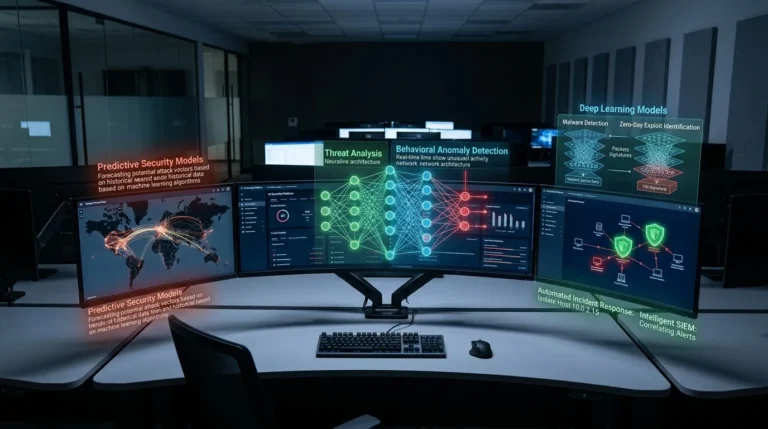


While external cyberattacks often dominate headlines, insider threats remain a persistent and complex risk for organizations. Whether caused by malicious intent, negligence, or compromised credentials, insider activity can lead to significant data breaches and operational disruption. As digital environments expand and remote work becomes widespread, enterprises are strengthening behavioural monitoring strategies to address internal risk exposure.
Insider threats are particularly challenging because they originate from trusted users — employees, contractors, or partners — who already possess authorized access to systems. Traditional security controls designed to block external intrusions may not detect misuse of legitimate credentials.
Modern cybersecurity strategies therefore emphasize user behaviour analytics (UBA) and continuous monitoring. These tools analyse user activity patterns to identify anomalies that could signal unauthorized behaviour.
Security providers such as Splunk and Darktrace offer behavioural monitoring platforms capable of detecting unusual data access patterns, abnormal login behaviour, and atypical file transfers.
Common insider threat scenarios include:
- Unauthorized access to sensitive data
- Excessive data downloads
- Privilege misuse
- Accidental data exposure
- Compromised employee accounts
Behavioral analytics systems establish baselines for normal user activity. For example, if an employee typically accesses financial data during standard working hours, a sudden login attempt from an unfamiliar region at an unusual time may trigger an alert.
Cloud adoption adds additional complexity. Employees often access systems hosted on platforms like Microsoft and Amazon Web Services from multiple devices. Continuous authentication and device health verification help mitigate risks in distributed environments.
Insider threats can be categorized into three primary types:
- Malicious insiders acting intentionally
- Negligent insiders making unintentional errors
- Compromised insiders whose credentials are exploited
Each scenario requires different mitigation strategies. Malicious behaviour may involve deliberate data theft, while negligent actions often stem from poor security awareness.
Training and awareness programs reduce accidental insider risks. Employees educated about phishing tactics and data handling policies are less likely to make costly mistakes.
Privilege management is another critical safeguard. Least-privilege access controls ensure that users only access systems necessary for their roles.
Data loss prevention (DLP) tools further strengthen defences by monitoring file transfers and preventing unauthorized sharing of sensitive information.
Key challenges in insider threat detection include:
- Balancing monitoring with employee privacy
- Distinguishing between legitimate and malicious activity
- Managing large volumes of behavioural data
- Maintaining compliance with privacy regulations
Privacy considerations are particularly sensitive. Organizations must ensure monitoring practices comply with applicable laws and maintain transparency with employees.
Automation enhances detection speed. AI-driven behavioural models continuously analyse data across endpoints, applications, and cloud services.
Incident response planning should account for insider scenarios. Clear escalation procedures and forensic analysis capabilities help investigate suspicious behaviour efficiently.
Board-level attention to insider threats has grown as high-profile cases highlight reputational and financial impact.
Industry experts emphasize that insider risk management requires a holistic approach — combining technical monitoring, governance policies, and cultural awareness.
As digital workplaces evolve, insider threat mitigation remains a core component of cybersecurity strategy.
By integrating behavioral analytics, strict access controls, and employee education, organizations reduce exposure while maintaining operational trust.
In an environment where identity defines access, continuous verification and anomaly detection form essential safeguards against internal risk.