
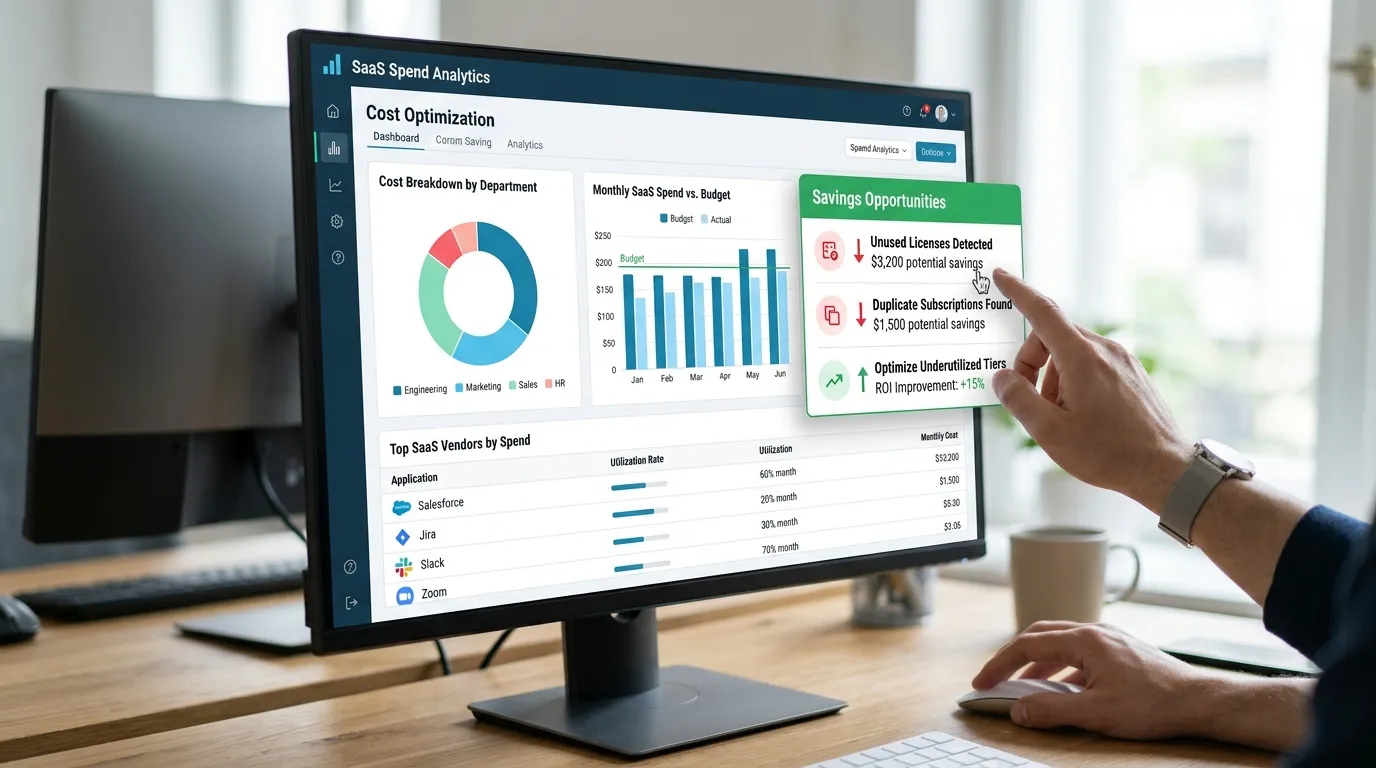

As enterprise SaaS portfolios expand across departments, cost optimization and vendor consolidation have become executive-level priorities. Over the past decade, organizations rapidly adopted cloud-based software to accelerate digital transformation. However, decentralized purchasing and departmental autonomy have often resulted in overlapping tools, underutilized licenses, and rising subscription costs.
Chief Financial Officers and procurement leaders are now conducting comprehensive SaaS audits to regain visibility and control.
The average large enterprise operates dozens — and in some cases hundreds — of SaaS applications. Without centralized oversight, “shadow IT” purchases and redundant functionality can inflate budgets significantly.
Cost optimization initiatives typically focus on:
- Identifying underutilized licenses
- Eliminating overlapping platforms
- Renegotiating enterprise agreements
- Consolidating vendors into unified suites
- Standardizing contract renewal cycles
Finance teams increasingly use SaaS management platforms to track subscription usage patterns, renewal timelines, and compliance exposure.
Major enterprise vendors such as Salesforce and Microsoft benefit from consolidation strategies, as enterprises often prefer bundled ecosystems that reduce integration complexity and vendor sprawl.
However, consolidation decisions must balance cost efficiency with innovation flexibility. Over-reliance on a single vendor ecosystem may limit agility or create vendor lock-in risk.
Usage analytics now play a central role in renewal negotiations. Procurement teams analyze active user rates, feature adoption metrics, and integration dependencies before extending multi-year agreements.
Enterprises are also seeking more flexible pricing structures, including:
- Usage-based tiers
- Enterprise-wide license discounts
- Performance-based pricing adjustments
- Early termination clauses
Vendor rationalization initiatives can produce substantial cost savings, but they require cross-department coordination.
IT, security, finance, and operational leaders must align on strategic platform priorities to avoid disrupting mission-critical workflows.
Security considerations also influence consolidation decisions. Reducing the number of vendors can lower the attack surface and simplify compliance oversight.
However, migration from one SaaS platform to another involves data transfer, retraining employees, and integration reconfiguration.
Executive leadership increasingly evaluates SaaS investments based on measurable ROI rather than feature expansion alone.
Net Revenue Retention (NRR) metrics also affect vendor behavior. SaaS providers are strengthening customer success programs to demonstrate value and prevent churn during optimization cycles.
In macroeconomic environments characterized by budget discipline, SaaS vendors must articulate cost-to-value alignment clearly.
Cost optimization does not necessarily mean reducing SaaS adoption; instead, it reflects a shift toward disciplined portfolio management.
Enterprises that proactively monitor software utilization and negotiate flexible contracts are better positioned to control long-term technology spend.
As SaaS markets mature, vendor consolidation and cost governance are becoming permanent components of enterprise IT strategy rather than temporary cost-cutting measures.
Operational efficiency now extends beyond internal processes — it includes strategic oversight of the SaaS ecosystem itself.