
Cybersecurity • 10 days ago • Neha Jamwal
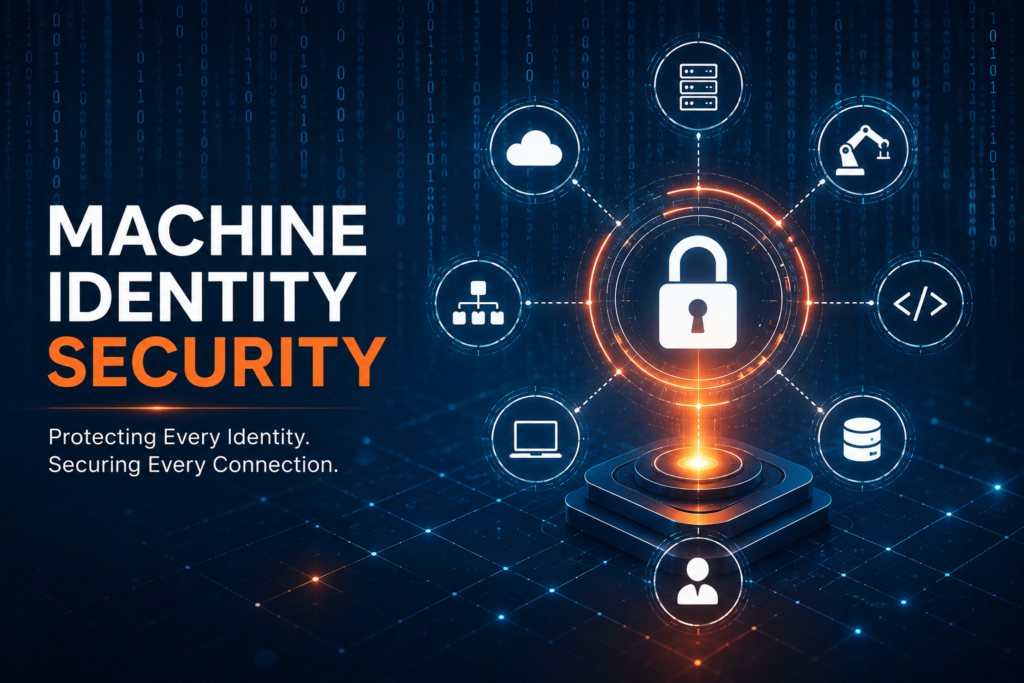
For years, cybersecurity discussions have revolved around protecting employees, customers, and privileged administrators. Organizations invested heavily in password policies, multi-factor authentication, endpoint security, and user awareness training. While these measures remain essential, a far less visible threat has quietly emerged inside modern enterprises—the explosive growth of machine identities. Every cloud application, API, microservice, container, automation workflow, bot, and integration requires a digital identity to communicate with another system. Unlike human users, these identities never sleep, rarely change passwords, and often operate with elevated privileges.
As businesses accelerate digital transformation and automate operations across partners, vendors, and cloud platforms, machine identities are multiplying at an unprecedented pace. Many organizations now have significantly more machine identities than human users, creating an attack surface that is poorly understood and often poorly protected. The next major frontier in B2B cybersecurity is no longer human identity management—it is securing the invisible identities that power modern business.
The Invisible Workforce Running Every Enterprise
Behind every online transaction lies a complex network of automated systems exchanging information continuously. Purchase orders travel through APIs. Inventory systems synchronize with suppliers. Finance platforms communicate with banking services. Customer relationship management tools integrate with marketing automation platforms. Each of these interactions relies on machine credentials. Unlike employees who log in once or twice daily, machine identities perform millions of authentication events every hour. This invisible workforce enables speed, efficiency, and scalability—but it also creates countless opportunities for cybercriminals to exploit forgotten credentials or excessive permissions.
Why Attackers Prefer Machine Credentials
Cybercriminals understand that machine identities often receive less attention than employee accounts. Human accounts are regularly audited, protected by multi-factor authentication, and monitored for suspicious behavior. Machine credentials, however, may remain active for years without review. Compromised service accounts can provide attackers with:
- Persistent access to critical systems
- Elevated administrative privileges
- Automated lateral movement
- Direct database connectivity
- API access to sensitive information
- Minimal user interaction that avoids detection
Because these credentials appear legitimate, malicious activity can blend seamlessly into normal business operations.
The API Economy Has Changed Everything
Modern B2B organizations depend heavily on APIs to exchange data with customers, suppliers, logistics providers, payment gateways, and cloud services. APIs have become the digital highways of enterprise collaboration. Every API requires authentication, tokens, certificates, or secret keys. Poor governance of these credentials can expose organizations to significant operational and financial risk. Common API security weaknesses include:
- Hardcoded credentials inside applications
- Long-lived authentication tokens
- Excessive access permissions
- Unused API keys remaining active
- Poor secret rotation practices
- Insufficient monitoring of API activity
Attackers increasingly target APIs because they often provide direct access to valuable business data without needing to compromise individual users.
Automation Creates Opportunity—and Risk
Businesses are embracing automation to improve efficiency. Robotic process automation, AI assistants, workflow engines, and integration platforms execute thousands of business processes every day without human intervention. While automation reduces manual effort, every automated workflow introduces another identity that requires protection. Without centralized governance, organizations quickly lose visibility into:
- Which systems communicate with each other
- What permissions each automation possesses
- Whether credentials are still necessary
- How secrets are stored
- Which workflows access sensitive business data
Security teams frequently discover orphaned automation accounts months after the business process has been retired.
Cloud Migration Has Expanded the Identity Perimeter
Traditional cybersecurity focused on securing the corporate network. Cloud computing has fundamentally changed that model. Applications now operate across multiple cloud providers, hybrid environments, SaaS platforms, and third-party ecosystems. Identity has become the new security perimeter. Instead of protecting buildings and networks, organizations must protect millions of digital trust relationships distributed across multiple environments. This shift requires security teams to think beyond infrastructure and focus on continuous identity verification.
Zero Standing Privileges: The Next Evolution
One of the most effective ways to reduce enterprise risk is eliminating permanent privileged access. Instead of granting continuous administrative rights, organizations are moving toward temporary, just-in-time permissions. This approach significantly reduces opportunities for attackers. Key principles include:
- Grant access only when required
- Remove privileges automatically after task completion
- Continuously validate identity
- Log every privileged action
- Review dormant accounts regularly
- Rotate secrets automatically
The objective is simple: permanent trust should no longer exist in modern enterprise environments.
AI Is Increasing the Scale of Identity Attacks
Artificial intelligence is accelerating both cyber defense and cybercrime. Attackers can now automate credential discovery, analyze exposed repositories for secrets, identify misconfigured APIs, and rapidly test compromised credentials across multiple systems. Meanwhile, defenders use AI to identify unusual authentication patterns, detect privilege escalation, and correlate suspicious activity across complex enterprise ecosystems. Organizations that combine identity security with intelligent behavioral analytics gain a significant advantage in detecting threats before they become breaches.
Building an Identity-Centric Cybersecurity Strategy
Future-ready organizations recognize that identity management is no longer an IT function—it is a business resilience strategy. An effective identity-first cybersecurity framework should include:
- Continuous discovery of machine identities
- Centralized secrets management
- Automated credential rotation
- API authentication governance
- Least-privilege access controls
- Identity lifecycle management
- Real-time behavioral monitoring
- Continuous compliance validation
Rather than securing devices alone, organizations must secure every digital interaction taking place across their ecosystem.
The Competitive Advantage of Identity Security
Customers expect businesses to protect their information. Partners expect secure integrations. Regulators expect accountability. Investors expect resilience. Organizations that proactively govern digital identities demonstrate operational maturity, reduce cyber risk, and strengthen trust across their supply chain. Identity security is no longer simply a defensive measure—it has become a competitive differentiator that supports long-term digital growth.
Conclusion
The most dangerous cybersecurity risks are often the ones organizations cannot see. Machine identities quietly power every cloud application, automated workflow, API connection, and business integration. Their rapid growth has created an invisible attack surface that traditional security strategies were never designed to manage. Forward-thinking B2B organizations are shifting from perimeter-based security to identity-centric security models that continuously validate trust, minimize privilege, and monitor behavior.
The future of cybersecurity will belong to businesses that understand a simple truth: every digital identity represents both an opportunity for innovation and a potential pathway for attack. Securing those identities today will define the resilience of tomorrow’s enterprise.