
Cybersecurity • 11 days ago • Neha Jamwal
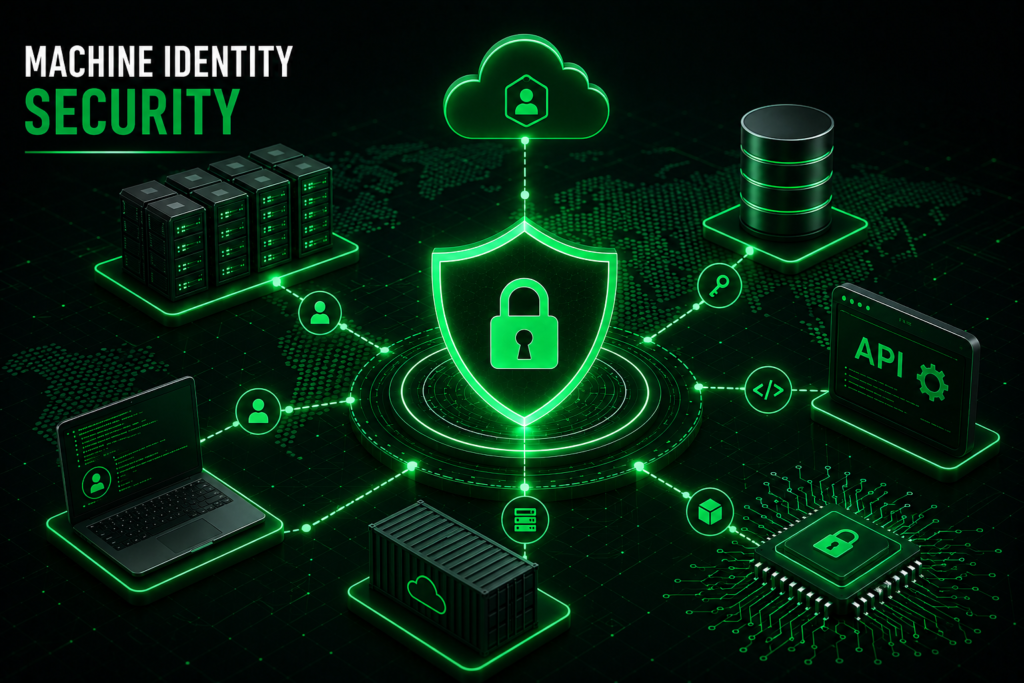
For years, cybersecurity strategies have focused primarily on human identities. Organizations invested heavily in securing employee accounts, implementing multi-factor authentication, enforcing password policies, and monitoring user behavior. While these controls remain essential, a new challenge has emerged within enterprise environments—one that receives far less attention despite carrying significant risk. That challenge is Machine Identity Security.
Modern businesses are powered by far more than human users. Applications communicate with other applications, cloud workloads connect to databases, APIs exchange information continuously, and automated systems perform critical business operations around the clock. Each of these interactions relies on digital identities that enable systems to trust one another. The problem is that most organizations now have vastly more machine identities than human identities. Yet many security programs remain designed primarily for people.
As digital transformation accelerates, machine identities are becoming one of the most attractive targets for cybercriminals and one of the most important priorities for B2B cybersecurity leaders.
What Is a Machine Identity?
A machine identity is a digital credential that allows systems, applications, devices, and services to authenticate and communicate securely.
Examples include:
- SSL/TLS certificates
- API keys
- Service accounts
- OAuth tokens
- Encryption certificates
- Cloud workload identities
- Container identities
- Secrets used in automation platforms
Unlike human users who log in occasionally, machine identities operate continuously behind the scenes. They power virtually every digital business process.
Without them, modern enterprises would struggle to function.
Why Machine Identities Are Becoming a Major Cybersecurity Concern
The rapid adoption of cloud computing, APIs, automation, containers, and artificial intelligence has created an explosion in machine identities. Many organizations now manage:
- Thousands of employees
- Tens of thousands of devices
- Hundreds of applications
- Millions of machine-to-machine connections
Security teams often discover that machine identities outnumber human identities by a significant margin. The challenge is that these identities frequently receive less visibility, less governance, and less monitoring than traditional user accounts. As a result, attackers increasingly view them as valuable entry points into enterprise environments.
The Hidden Risks of Poor Machine Identity Management
Most cybersecurity incidents begin with a compromise of trust. Machine identities are essentially trust mechanisms. When attackers gain access to them, they can often bypass traditional security controls because the compromised identity appears legitimate. Common risks include:
- Exposed API keys
- Hardcoded credentials in applications
- Expired certificates
- Overprivileged service accounts
- Unmanaged secrets
- Misconfigured cloud identities
- Forgotten machine accounts
A single compromised machine identity can potentially provide access to sensitive systems, customer data, cloud infrastructure, or internal applications. Because machine identities often operate automatically, malicious activity can remain undetected for extended periods.
Why APIs Have Changed the Threat Landscape
One of the biggest drivers behind machine identity risk is the widespread use of APIs. Businesses rely on APIs to connect applications, partners, customers, vendors, and internal systems. Every API interaction requires some form of authentication. The challenge is that API credentials often become scattered across development environments, repositories, automation tools, and cloud platforms. Security teams commonly struggle with:
- Lack of API inventory
- Credential sprawl
- Inconsistent access controls
- Excessive permissions
- Limited visibility into API usage
Attackers understand this reality and frequently target APIs because they provide direct access to valuable business functions and data. As organizations become more interconnected, API security and machine identity security are becoming inseparable disciplines.
The Growing Impact of Cloud and Automation
Cloud adoption has transformed how businesses deploy and manage technology. Instead of static environments, organizations now operate dynamic infrastructures where applications and workloads are constantly created, modified, and removed. This creates a significant identity management challenge. New workloads require credentials. Automated processes need authentication. Cloud services must establish trust relationships. Without centralized governance, organizations often accumulate thousands of unmanaged machine identities. This creates a dangerous scenario where security teams cannot confidently answer questions such as:
- Which identities exist?
- Who created them?
- What systems do they access?
- Are they still needed?
- Have they been rotated recently?
Visibility becomes increasingly difficult as environments grow.
Building a Machine Identity Security Strategy
Organizations can no longer afford to treat machine identities as a technical afterthought. A modern strategy should focus on visibility, governance, and automation. Key priorities include:
- Maintaining a centralized inventory of machine identities
- Automating certificate and credential management
- Enforcing least-privilege access
- Regularly rotating secrets and keys
- Monitoring machine-to-machine communications
- Eliminating unused service accounts
- Implementing identity lifecycle management
The goal is to establish the same level of control for machine identities that organizations already apply to human identities.
Why Zero Trust Depends on Machine Identity Security
Many organizations are embracing Zero Trust architectures to strengthen cybersecurity. However, Zero Trust cannot succeed without reliable identity verification. Every workload, application, API, and service must continuously prove its legitimacy before receiving access to resources. This means machine identity security forms a critical foundation of Zero Trust. Without strong controls, organizations risk granting trust to compromised systems that appear legitimate on the surface. In many ways, machine identities have become the new perimeter.
The Future of B2B Cybersecurity
The next phase of cybersecurity will be increasingly defined by non-human identities. Organizations continue to automate operations, integrate cloud platforms, deploy AI-powered systems, and expand digital ecosystems. Each advancement creates additional machine identities that require protection. Businesses that focus solely on user security may overlook one of the fastest-growing attack surfaces in the enterprise.
The most resilient organizations will be those that recognize machine identities as strategic assets rather than technical details. By implementing strong governance, continuous monitoring, and automated lifecycle management, they can reduce risk while enabling innovation. In an increasingly connected business world, trust is no longer established solely between people. It is established between machines. Protecting those relationships may become one of the defining cybersecurity challenges for modern enterprises.