Physical Address
304 North Cardinal St.
Dorchester Center, MA 02124
Physical Address
304 North Cardinal St.
Dorchester Center, MA 02124


Cloud computing has fundamentally redefined how organizations build, deploy, and scale digital systems. It is not simply an alternative hosting model; it represents a structural shift in how infrastructure is consumed, managed, and optimized. For decades, businesses operated under a hardware-centric model. Servers were physical machines that had to be purchased, installed in data centers, configured manually, and maintained over time. Growth required capital investment. Scaling required forecasting. Mistakes were expensive.
Cloud computing replaced that rigid framework with a flexible, service-oriented paradigm.
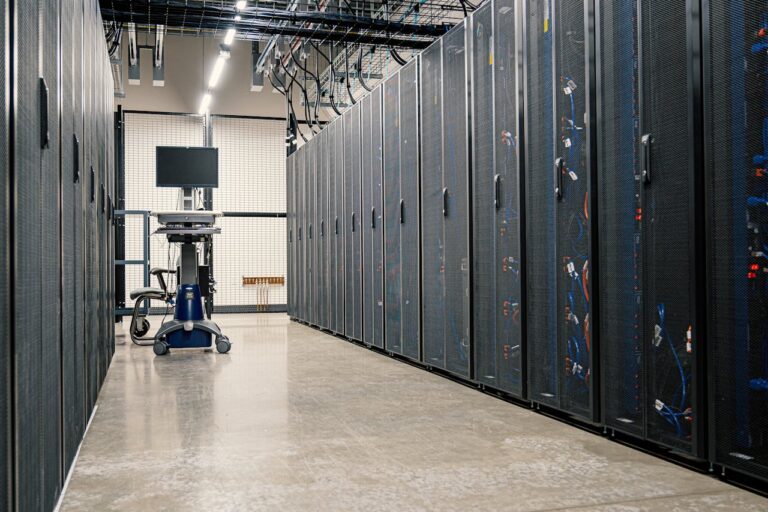
Instead of owning infrastructure, companies now access computing power as a utility. Global providers such as Amazon Web Services, Microsoft Azure, and Google Cloud Platform operate massive, distributed data centers around the world. These hyperscale environments contain millions of servers, advanced networking backbones, and highly redundant storage systems. What organizations consume is not a specific physical server, but an abstracted pool of virtualized resources delivered on demand.
This abstraction is the foundation of cloud computing’s power.
From Hardware Ownership to Resource Consumption
In traditional IT environments, infrastructure decisions were long-term commitments. If a company anticipated growth, it had to purchase enough hardware to handle peak demand. If projections were inaccurate, the consequences were significant. Overestimating demand meant wasted capital and underutilized servers. Underestimating demand meant performance degradation, downtime, and lost revenue.
Cloud computing eliminates that binary risk model.
Resources can be provisioned instantly and scaled dynamically. A startup can begin with minimal infrastructure and expand globally within months. A retail company can handle seasonal traffic spikes without permanently investing in excess capacity. This elasticity transforms infrastructure from a constraint into an enabler.
The financial implications are equally transformative. Traditional infrastructure required capital expenditure (CapEx), tying up funds in depreciating hardware assets. Cloud introduces operational expenditure (OpEx), where organizations pay only for the resources they actively consume. This shift improves cash flow flexibility and reduces financial risk.
Elasticity: The Defining Characteristic
Elasticity is often described as the hallmark of cloud computing, but its impact is deeper than simple scaling. Elastic systems respond automatically to changing conditions. When application traffic increases, additional compute instances are provisioned automatically. When demand decreases, resources are decommissioned. This responsiveness ensures consistent performance while optimizing cost efficiency.
In practice, elasticity allows organizations to operate with precision. Rather than designing systems for worst-case scenarios, they design for average demand and allow automation to handle spikes. This leads to more efficient resource utilization and better user experiences.
Elasticity also supports experimentation. Development teams can launch temporary environments for testing, quality assurance, or feature validation without long-term commitments. Once testing is complete, those environments can be removed instantly. This flexibility encourages innovation and reduces friction in the development lifecycle.
Global Distribution and High Availability
Cloud computing is inherently global. Providers maintain infrastructure in multiple geographic regions, each containing isolated availability zones. This distributed architecture enables applications to run closer to end users, reducing latency and improving performance.
More importantly, distribution enhances resilience.
If one data center experiences an outage, workloads can shift automatically to another availability zone. If an entire region encounters disruption, multi-region deployments can maintain continuity. This level of redundancy was historically available only to the largest enterprises with vast budgets. Cloud democratizes it.
High availability in cloud environments is not an afterthought; it is an architectural principle. Systems are designed to expect failure. Components are replicated. Traffic is distributed through load balancers. Health checks monitor instance status continuously. Automation replaces manual recovery processes.
The Shared Responsibility Model
Security in cloud environments operates under a shared responsibility framework. The provider secures the underlying physical infrastructure, including data centers, hardware, and core networking. Customers are responsible for securing their applications, managing identity and access policies, and protecting their data.
This division of responsibility encourages clarity. Organizations maintain control over their workloads while benefiting from the provider’s large-scale investment in security infrastructure. Advanced features such as encryption at rest, encryption in transit, identity and access management systems, and compliance certifications are built into the platform.
When configured correctly, cloud environments often exceed the security posture of traditional on-premise systems. However, misconfiguration remains a significant risk. Proper governance, monitoring, and policy enforcement are critical.
Service Models That Abstract Complexity
Cloud computing is structured around different service models, each offering varying levels of abstraction. These models allow organizations to choose how much infrastructure responsibility they retain.
Core Cloud Service Models
These models reflect increasing abstraction. As abstraction increases, operational complexity decreases. Organizations can focus more on delivering business value rather than managing servers.
Operational Transformation Through Automation
Automation is deeply embedded in cloud environments. Infrastructure can be provisioned through APIs, configuration files, and infrastructure-as-code tools. Monitoring systems collect performance metrics continuously. Scaling policies adjust capacity dynamically. Backups can be scheduled and managed automatically.
This automation transforms operational workflows. Instead of reactive maintenance, teams implement proactive monitoring. Instead of manual configuration, infrastructure becomes programmable. Changes are version-controlled and traceable.
Automation also reduces human error. In traditional systems, misconfigured servers or forgotten patches could lead to vulnerabilities. Cloud environments encourage repeatable, validated processes.
The Strategic Impact of Cloud Adoption
Cloud computing is often framed as a technical decision, but its true impact is strategic. It enables faster time-to-market, supports global expansion, and lowers the barrier to innovation. Startups can compete with established enterprises because infrastructure no longer determines scale potential.
Organizations adopting cloud often experience cultural transformation as well. Teams become more agile. Development and operations collaborate more closely. Experimentation becomes less risky. Infrastructure becomes elastic, programmable, and resilient.
Strategic Advantages of Cloud Adoption
Cloud computing enables businesses to respond quickly to market shifts and technological change.
The Future Trajectory of Cloud
Cloud infrastructure continues to evolve. Edge computing brings resources closer to users. Serverless computing abstracts infrastructure entirely. Artificial intelligence enhances automation and predictive scaling. Hybrid and multi-cloud strategies provide flexibility and risk mitigation.
What remains constant is the shift away from hardware ownership toward service-based consumption. Infrastructure is no longer a static asset; it is a dynamic capability.
Cloud computing has moved from innovation to expectation. Modern digital businesses assume elastic infrastructure, automated scaling, global availability, and integrated security. Organizations that resist this transformation often find themselves constrained by legacy limitations.
In essence, cloud computing redefines infrastructure not as a physical asset, but as a strategic, programmable resource. It turns servers into services, hardware into software, and capacity into a dynamic variable rather than a fixed constraint.
The cloud is not simply where applications run. It is the platform upon which modern digital economies operate.